

viernes, 9 de abril de 2021
Show HN: Export Mail for Microsoft Outlook for Mac https://ift.tt/3wKeSXI

Show HN: Developer Friendly Production Access https://ift.tt/3mzGWZp
Show HN: Alternative API to Exchangeratesapi.io https://ift.tt/2PO4KwE
Show HN: Turn the Browser into a Productivity Machine https://ift.tt/3t8lUUi
jueves, 8 de abril de 2021
Show HN: I built a simple bot to describe (generate ALT) and host images https://ift.tt/3dPjUJR
Show HN: Simple-GitHub-Buttons https://ift.tt/3muAxP4
Parking Meters Help Keep San Francisco Vibrant
By Monica Munowitch
Parking Meters Help Keep San Francisco Vibrant
In a dense, vibrant, expensive city like San Francisco which is bounded by water on three sides, space is at a premium. On city streets, which take up about 20% of San Francisco’s land area, there are many different forms of transportation, all competing for that limited space. As a result, on-street parking for cars is just one of many demands that residents, merchants, visitors and others have for the road network. And of course when it comes to on-street parking, curb space is a very limited resource. As it’s not possible to build more curbs, the city uses regulations to help ensure that spaces are available when and where they’re needed most.
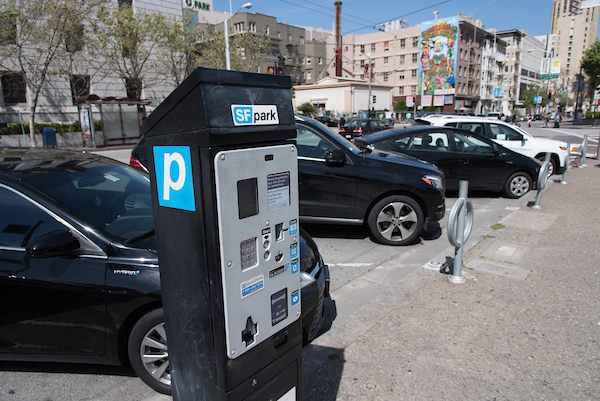
Multi-space Pay Station on McAllister Street
In managing these competing demands, parking meters are the most effective tool we have --particularly in commercial districts and other high-demand areas. They create availability by encouraging people to park only for the length of time they need. This helps to keep spaces available for people whose only option is to drive and park. Without parking meters, the availability of parking in high-demand areas would drop considerably—many spaces could, for example, be taken for days or weeks by people at work, at home or on vacation.
Additionally, when parking is hard to find, people in cars circle the area looking for spaces or double-park while they wait for a space. This leads to congestion for everyone on the street, slows down Muni, creates safety hazards for people walking and biking, and negatively impacts merchants, businesses, and residents. Successful parking management in San Francisco not only increases the availability of parking for people who need to drive, it makes transit more reliable, manages congestion, helps the economy, and creates safer streets.
While parking meters do generate significant revenue for the city, they also have substantial costs. Single-space meters, which make up the majority of meters in San Francisco, cost over $600 apiece; each multi-space paystation (serving 10 or more spaces) costs $6,000. Other costs that the city pays for this valuable tool add up to millions of dollars per year, including labor for installation and maintenance, battery replacement, coin collection, data/communications fees, credit card fees, vendor fees and enforcement staffing.
San Francisco’s City Charter mandates that parking revenues in excess of management costs be directed toward supporting transit —a progressive and forward-looking system that voters approved when they supported the creation of the SFMTA in 1999. So in San Francisco, paid parking and transit are inextricably linked and create a virtuous cycle: paid parking keeps the streets clear of double parkers and cars circling in search of a space and helps transit move faster and more reliably; more reliable transit is more appealing for people and leads to more transit trips, which opens up more parking spaces for the people who need to drive. And when drivers pay for parking, their contributions help fund the transit service that in turn reduces the need for driving. A well-managed parking policy prevents congestion, reduces pollution, makes the streets safer, and provides a transportation lifeline to the hundreds of thousands of San Franciscans who do not have a car. This encourages the type of density and walkability that make San Francisco an appealing place to live, work, and visit.
Published April 08, 2021 at 10:56PM
https://ift.tt/3s6k3xM
Show HN: A Twitter crawler for app ideas https://ift.tt/39TPjdk
Show HN: IQcaptcha https://ift.tt/3uy7Qn3
Show HN: Google Photos fully encrypted alternative is available on F-Droid https://ift.tt/3mx05eE
Show HN: I built a reverse image search for pixel art https://ift.tt/3s07y6Q
Show HN: Ory Keto, open source authorization server based on Google Zanzibar https://ift.tt/3d1ZFcI
Show HN: Find your next job board job with jobboardjobboard.com https://ift.tt/323rtHn
Show HN: LadyLua, batteries-included static Lua 5.1 interpreter https://ift.tt/3t7fzbK
Show HN: Raspberry Pi 400 – CyberDeck Project https://ift.tt/3wD9wO8
miércoles, 7 de abril de 2021
The 150 Year History of Muni’s ‘Newest’ Route: The 15
By Jeremy Menzies
With the return of Muni’s 15 route earlier this year as the 15 Bayview Hunters Point Express, here’s a quick look back at a line that traces part of its lineage back over 150 years.
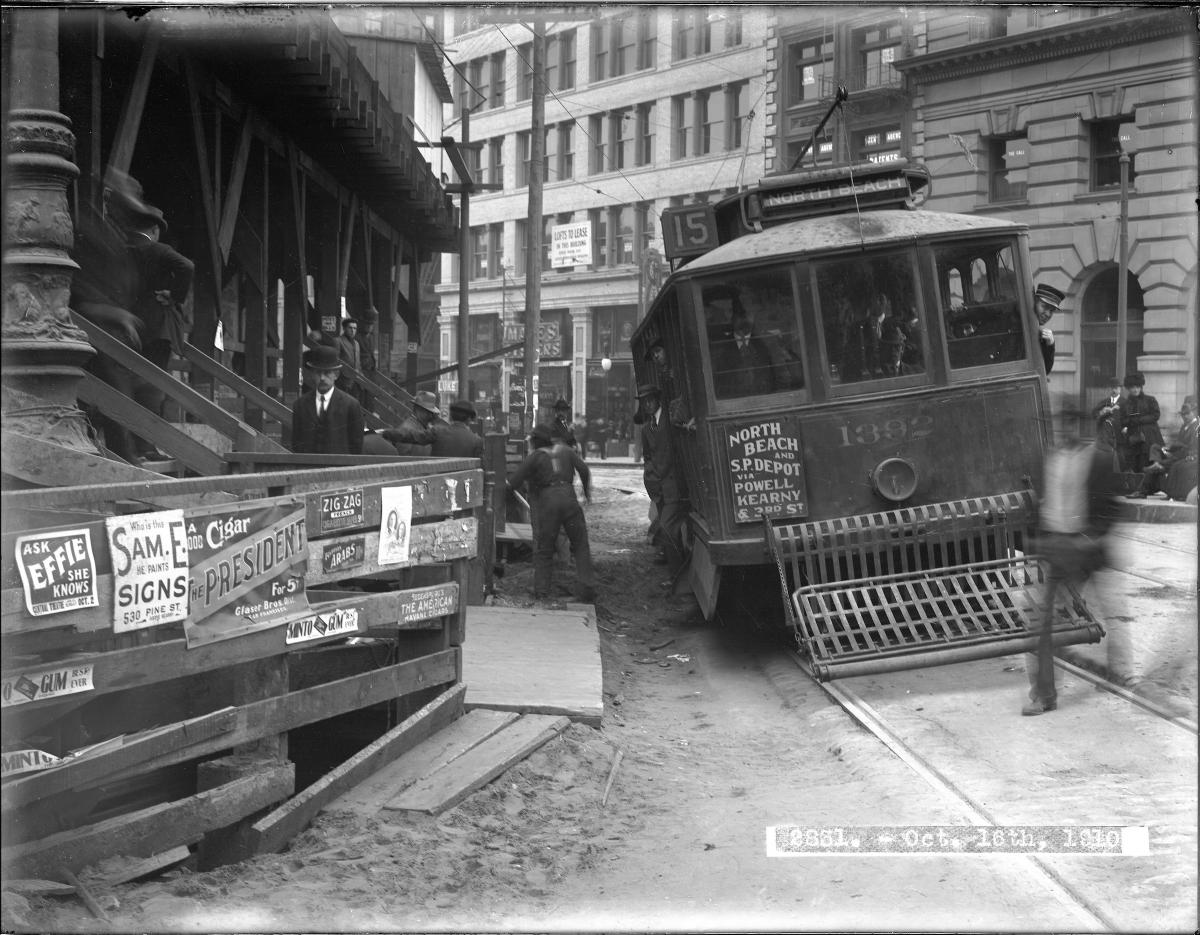
A 15 3rd & Kearny streetcar picks its way through a crowded downtown scene in this 1910 photo.
In the mid-1800s people began travelling San Francisco’s 3rd Street corridor by stagecoach and horse-drawn streetcars. At the turn of the 20th century, horse car service gave way to electric streetcars, with three lines eventually sharing the work of serving 3rd Street from north to south. Operated by the United Railroads Company, the combined service of the 15 Kearny & North Beach, 16 3rd & Kearny, and 29 3rd & Sansome lines ran from North Beach all the way to the county line in Visitacion Valley.
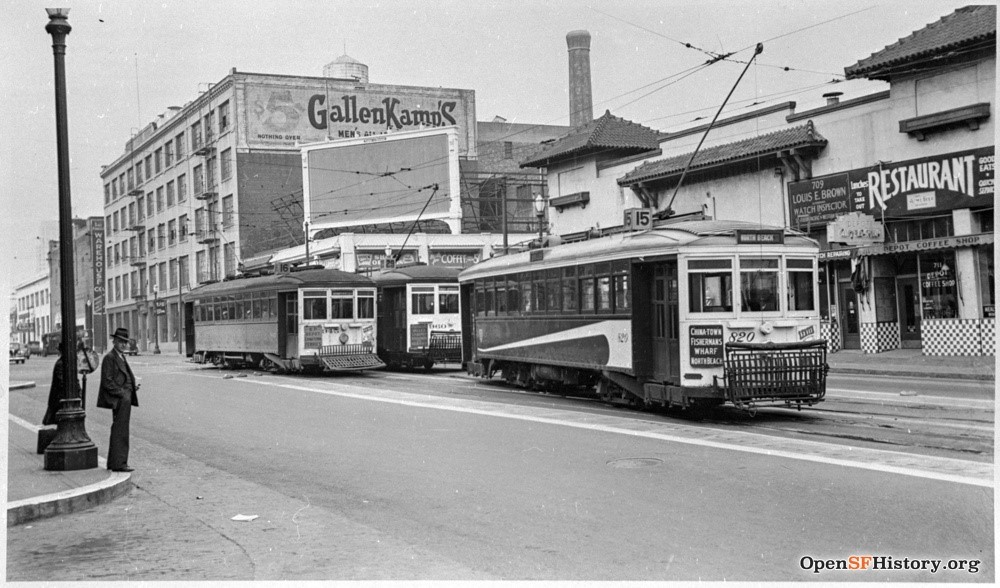
A photo from OpenSFHistory.org showing the 15, 16, and 29 Streetcars outside the Southern Pacific Railroad Depot in 1940, shortly before streetcar service would be replaced with buses.
In the 1940s, streetcar service was replaced by buses that combined multiple lines into one route. Like their streetcar predecessors, the buses stopped at key locations along 3rd Street, including the factories in Dogpatch, Southern Pacific Railroad Depot (now 4th & King Caltrain), downtown commercial district, Market Street transit lines and the docks in the North Beach area.
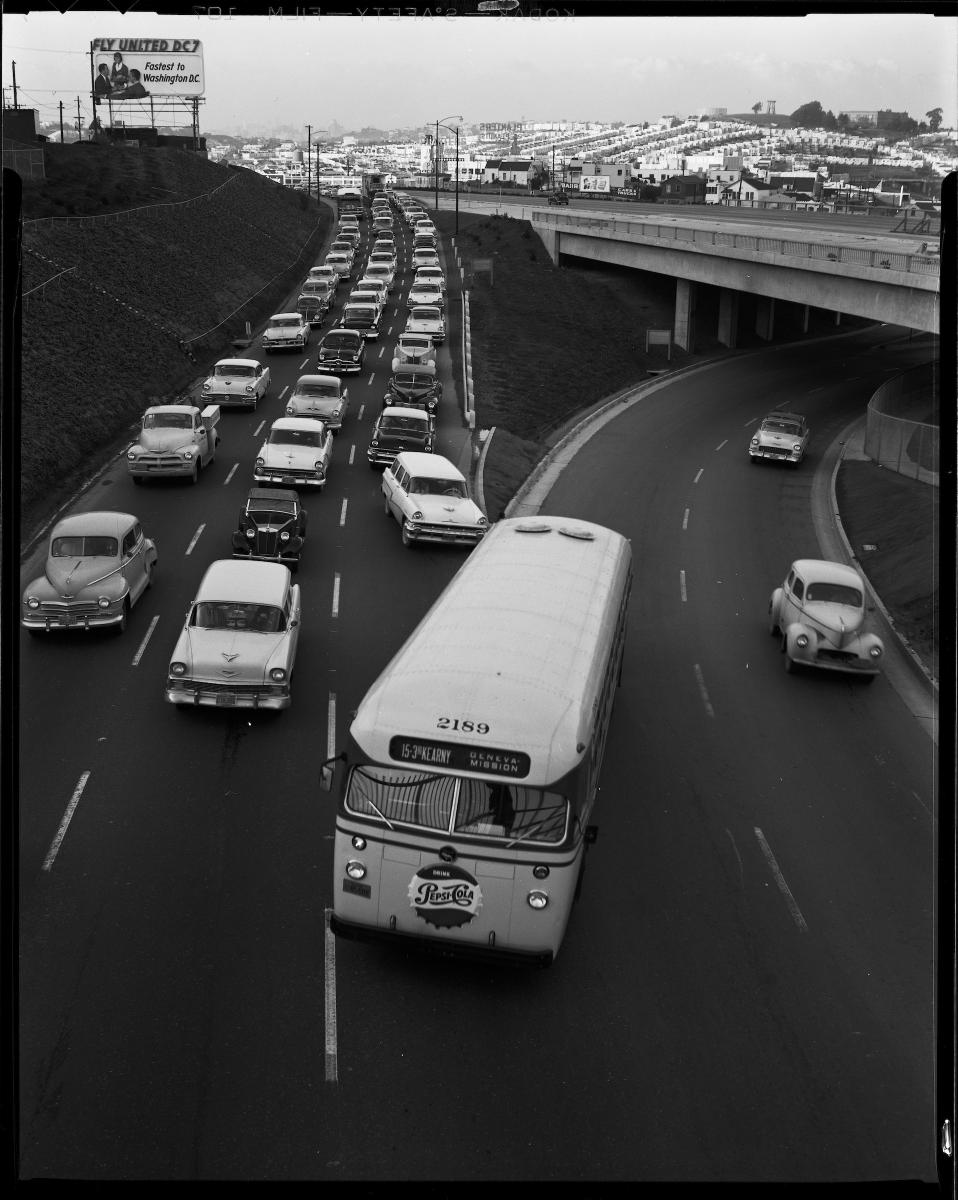
A Muni 15 3rd & Kearny bus makes a lane change on San Bruno & Harkness avenues in this 1957 photo.
As the years passed and the city changed, the 15 changed with it, serving different terminals depending on where passengers need to go. Eventually this expansion led it to become one of Muni’s longest routes, running 11 miles from North Beach all the way to City College. The 15 Third was discontinued in 2007, after over 60 years of service, when it was replaced by the T Third rail line on Third Street and by a rerouting of the 9x and 9AX routes north of Market Street.
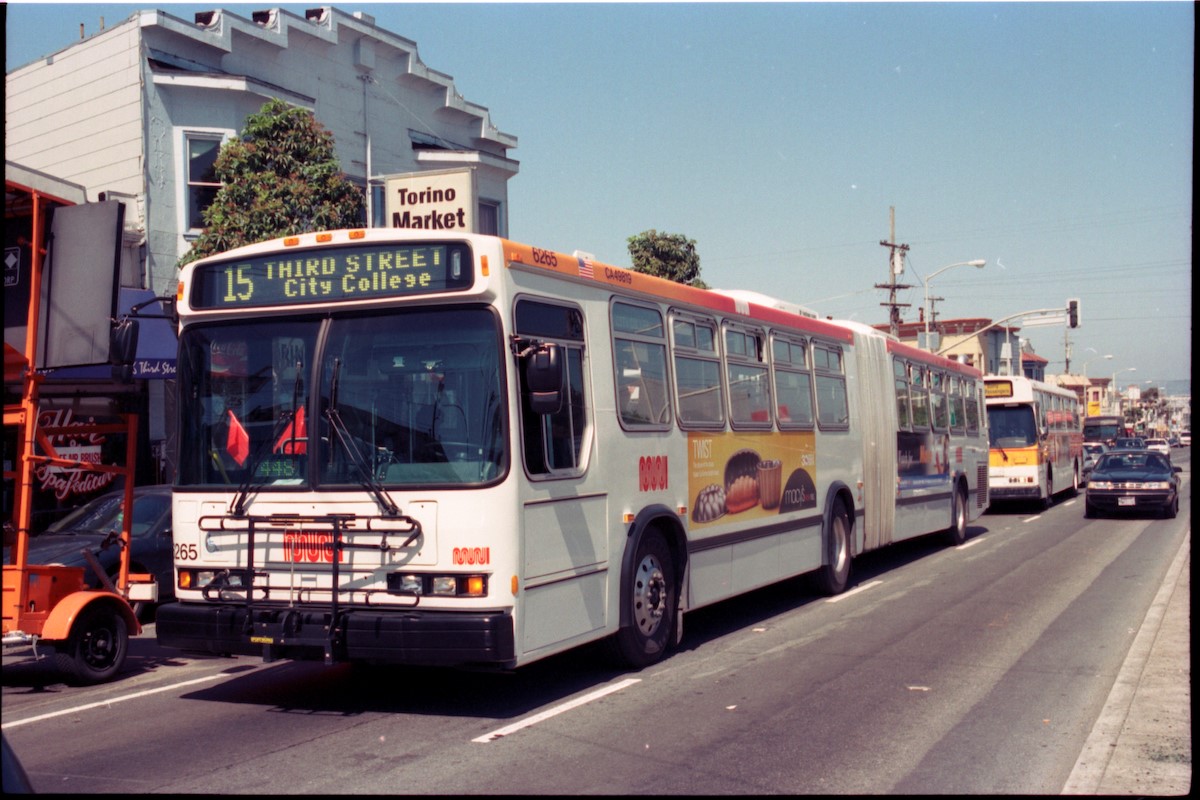
A 15 Third Street coach passes Torino Market at 3rd and Palou on its way out to City College in 2002.
Rapid growth in Mission Bay in recent years has resulted in changing needs for people who travel to and through this corridor. So San Francisco residents began advocating for additional service, particularly through the Southeast Muni Expansion Project in 2018. Based on public input, that project prioritized a more direct trip to downtown from the Bayview. Responding to these concerns, we established the “new” 15 Bayview Hunters Point Express in January 2021.
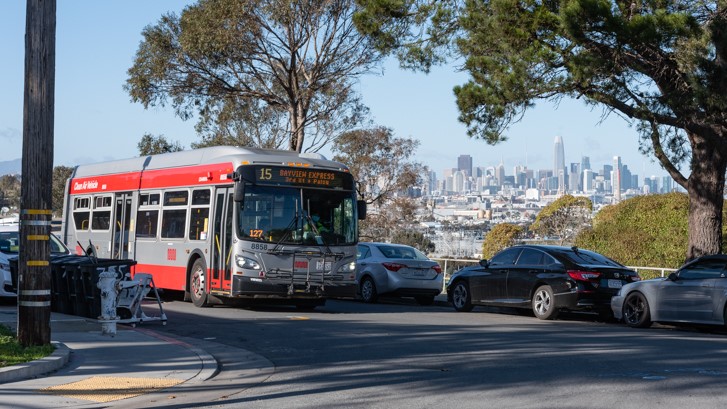
A 15 Bayview Hunters Point Express coach passes a city vista along Jerrold Ave in the Hunter’s Point neighborhood on January 25, 2021.
Starting out in Hunter’s Point and traveling to the transit hub at 3rd and Palou, the “new” 15 takes riders to locations within the neighborhood and then makes limited express stops to downtown and regional transit connections. The 15 Bayview Hunters Point Express route provides some of the same north-south connections as the original stagecoach and horse car lines back in the mid-1800s. Just like its predecessors, it builds on a core 3rd Street service and offers a transportation option that seeks to meet the needs of today’s residents.
Published April 08, 2021 at 03:18AM
https://ift.tt/3t1GUMa
Show HN: Microsoft Teams (unofficial) Go library (WIP) https://ift.tt/3t5N3as
Show HN: Dresscode – Dress up your code with a beautiful GUI https://ift.tt/3rWuqEb
Show HN: Kaboom.js zero-dependency declarative JavaScript game library https://ift.tt/3dBbrKc
Show HN: S3Drizzle – S3 Logs File Exfiltration PoC https://ift.tt/3mrSTA6
Show HN: Spaik, a Lisp compiler/VM with a moving GC written in Rust https://ift.tt/3wyw8PL
Show HN: Modmusicgen.com – generating piano music from tracker music https://ift.tt/2Rh5NWk
Show HN: Datahut.ai – free directory of open source for data science/engineering https://ift.tt/3wA5g1R
Show HN: Books to Learn Apache Kafka https://ift.tt/3cX18RD
Show HN: Skruv – No-dependency, no-build, small JavaScript framework https://ift.tt/2Q4j83L
The Art of Balancing Work and Life: Tips and Strategies
Mastering the Art of Balancing Work and Life In today's fast-paced world, many individuals struggle to find a healthy balance between th...

-
Watch video on YouTube here: https://youtu.be/3tGZ-bSpFWE
-
Watch video on YouTube here: https://youtu.be/PzDZWY6mgGg
-
Watch video on YouTube here: https://youtu.be/ntljnJmlIv0


