sábado, 30 de octubre de 2021
Show HN: SectorLISP Now Fits in One Sector https://ift.tt/3CpP59Q
viernes, 29 de octubre de 2021
Show HN: Open-source, local-first video file browser like YouTube https://ift.tt/3GzUeyu
Show HN: Comment Entire Code Files in Seconds with AI https://ift.tt/3GyBrUq
Slow Streets Become Spooky (Safe) Streets for Halloween
By Eillie Anzilotti
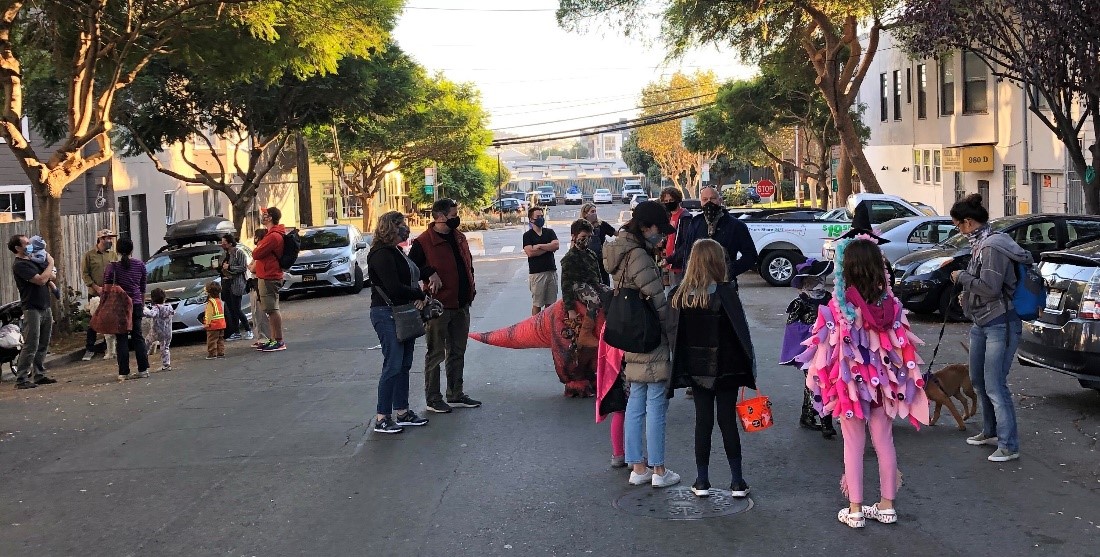
Halloween festivities on Minnesota Slow Street in 2020
This Halloween season, Slow Streets are becoming Spooky Streets. All across San Francisco, community groups are transforming their local Slow Streets into neighborhood gathering places for trick-or-treating, costume parties and more.
On October 31 from 3 to 6 p.m., organizers from Kid Safe SF and the Great Highway Park Initiative are turning the Great Highway into The Great Hauntway, a beachside block party with a costume contest, arts and crafts and a “spooky disco.” That same day, neighbors in Sunnyside are gathering on Slow Hearst Street for a Halloween party at 4 p.m. On Minnesota Street, the Dogpatch Neighborhood Association is hosting their second annual MinneSLOWta Spooky Slow Street Stroll on October 30—the same day that Slow Sanchez Street will host a Halloween Stroll.
Safe, car-light spaces for people to walk, bike and roll are essential every day, but especially on Halloween. Statistically, this holiday that revolves around children being out in the streets, often later in the evening, is the most dangerous day of the year for young pedestrians. To create safer conditions on San Francisco streets for little vampires, ghosts and witches, the SFMTA encourages people to bike, walk or take Muni on Halloween—and for people who do have to drive to use extra caution. Because Outside Lands falls during Halloween weekend this year, the SFMTA is offering expanded, coordinated service between Muni and BART to enable people to opt for transit and keep streets safer.
Slow Streets add an additional layer of safety—which explains their popularity as Halloween gathering places. On Slow Streets corridors, vehicle traffic is designed to be limited to local access and through traffic is discouraged. Just recently, the Slow Streets team released its Evaluation Summary Report containing data on the past year of the program, which was launched initially as an emergency response to the COVID-19 pandemic, but supports SFMTA’s larger Vision Zero goals of ending traffic fatalities on city streets. Around 71% of San Francisco residents surveyed reported that their street became safer after being designated as a Slow Streets street. Programmatic data analysis shows that Slow Streets see a 35% decrease in daily traffic and a 14% decrease in vehicle speeds—along with a 36% decrease, on average, in collisions across the Slow Streets network. As conditions on Slow Streets corridors improved, more and more people--especially kids--felt safe biking and walking along them.
Last Halloween was the first year that neighborhoods had the option to celebrate with Slow Streets—and so many did. We’re thrilled to see the tradition continue this year, and hope everyone has a safe, spooky Halloween!
Hosting or attending a Halloween event on a Slow Street near you? We would love to learn about it and see pictures from the celebration! Get in touch at SlowStreets@SFMTA.com
Published October 29, 2021 at 05:29PM
https://ift.tt/3vWCoRn
Show HN: Programming is fun https://ift.tt/3ErQzRt
Show HN: Livetext – stream text to your audience https://ift.tt/3k89qJV
jueves, 28 de octubre de 2021
New Law Brings Safer Speed Limits to San Francisco
By Eillie Anzilotti
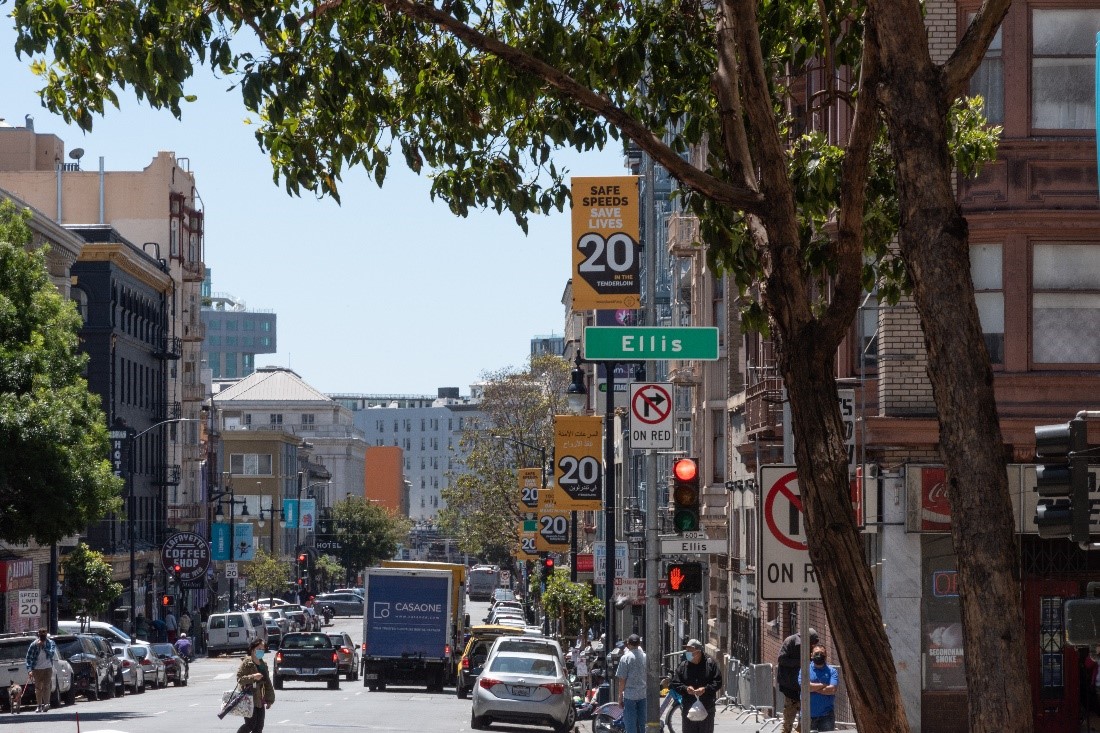
With the passage of California Assembly Bill 43 (Friedman)—which allows local jurisdictions to reduce speed limits in key areas—San Francisco is poised to make major progress toward our goal of achieving Vision Zero – eliminating traffic-related fatalities.
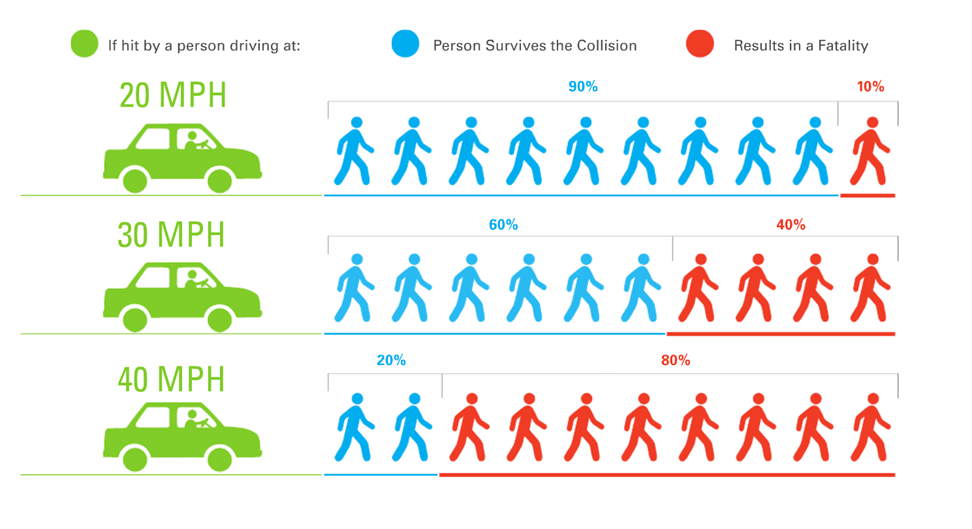
Because speed is the leading cause of serious and fatal crashes in San Francisco, reducing speeds is the single most effective tool for achieving Vision Zero. Before AB43, cities across California—including San Francisco—were limited in their ability to adjust local speed limits. Even slowing traffic down by 5 mph can make a difference of whether or not someone survives a crash, and AB43 will enable SFMTA to set speeds that promote safer streets for all along key corridors.
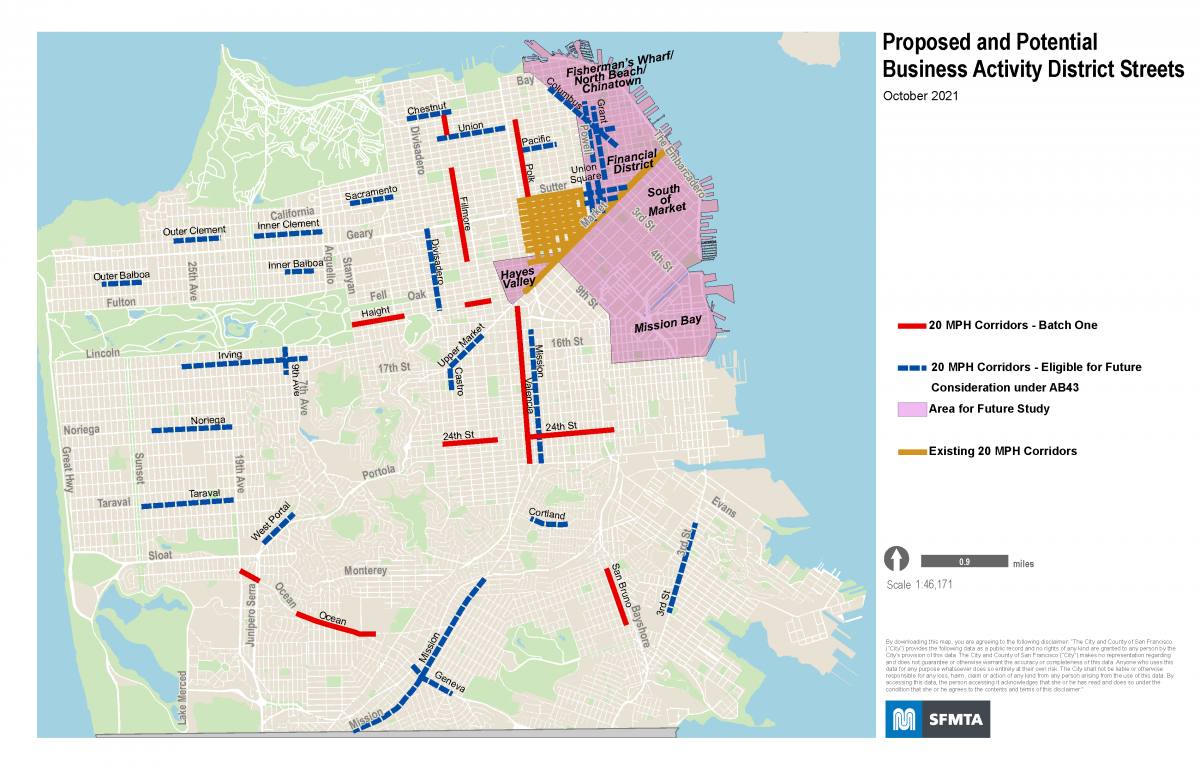
The SFMTA will implement the changes authorized through AB43 in two phases. First, under the provision that goes into effect in January 2022, the SFMTA will move to lower speed limits by 5 mph (from 25 mph to 20 mph, or 30 mph to 25 mph) in key business activity districts (streets where at least half of the property uses are dining or retail).
We have mapped out key corridors where these speed reductions will come into effect next year—including Haight, Polk, and Valencia streets—as well as other areas for future consideration. These speed limit changes still require SFMTA Board approval, and staff will be bringing them a proposal with an implementation plan for the first seven corridors in December. These first seven corridors for speed limit reductions from 25 to 20 mph include:
- 24th Street, from Diamond to Chattanooga streets and from Valencia to San Bruno Avenue;
- Fillmore Street, from Chestnut to Union streets and from Jackson to McAllister streets;
- Haight Street, from Stanyan Street to Central Avenue and from Webster to Steiner streets;
- Polk Street, from Filbert to Sutter streets;
- Ocean Avenue, from Geneva Avenue to Victoria Street and from Junipero Serra Boulevard to 19th Avenue;
- San Bruno Avenue, from Silver to Paul avenues; and
- Valencia Street, from Cesar Chavez to Market streets
We plan to accompany the rollout of the new speed limits along the streets with public education and outreach campaign on the importance of slow speeds for saving lives. We will return to the SFMTA Board in 2022 with additional proposed speed limit reductions that are eligible as business activity districts.
The second phase will be implementing another portion of the bill that authorizes the city to lower speeds by 5 mph on streets that are designated as “safety corridors”—streets that have the highest number of serious injuries and fatalities. In San Francisco, 75% of serious and fatal collisions occur on just 13% of city streets. This is especially important for advancing equity in San Francisco, as over half of corridors on the High Injury Network are in a Community of Concern. This particular aspect of the bill does not come into effect until June 2024, though, and requires the California Department of Transportation (Caltrans) to establish definitions of “safety corridors” through its roadway standards manual.
We have already implemented 20 mph limits throughout the Tenderloin, where every street is on the High Injury Network, and will continue to prioritize improvements in Communities of Concern.
In our upcoming 2021 Vision Zero Action Strategy, the SFMTA is committing San Francisco to a comprehensive approach to lowering speeds on key corridors across the city. We will continue to pair speed limit reductions with our existing strategies, like the Vision Zero Quick-Build Program, to slow speeds on our streets.
We appreciate the leadership of Assembly Transportation Committee Chair Laura Friedman, along with San Francisco co-sponsors Assemblymember David Chiu and Assemblymember Phil Ting in introducing this transformative legislation. Their leadership along with Mayor Breed, the Board of Supervisors, WalkSF, SF Bike Coalition, and San Francisco Bay Area Families for Safe Streets and all the many citizens who wrote letters, called into hearings and tweeted their support for this important step to address speeding on our streets, were essential to its success. We stand committed to safer streets in SF and will work urgently to reduce speed limits to save lives.
Published October 29, 2021 at 12:33AM
https://ift.tt/2ZEDB4b
Show HN: Telespace – Volumetric Streaming https://ift.tt/3Gz2S0c
Show HN: GitHub for Docker Images https://ift.tt/3jHXbmL
Show HN: FlakyBot – identify and suppress flaky tests https://ift.tt/3BojbJB
Show HN: Apple-Maps-Like Trees on Mapbox GL JavaScript https://ift.tt/3BqK4wt
Show HN: Learn Chinese with Live-Transcriptions of Radio Taiwan International https://ift.tt/3Ev9Rpn
Show HN: NLP and NER-powered beautiful bank transaction feed https://ift.tt/3jKKhof
Show HN: Diff for Formatted Documents (.docx) https://ift.tt/3jGfWHm
Show HN: 1-Click serverless hosting tool https://ift.tt/3vTueJE
Show HN: Sway:Config – A Raku library and script for parsing Sway's config https://ift.tt/3nwx0AK
Show HN: Sway-preview-keys – Program for previewing key bindings of Sway modes https://ift.tt/3Esw72O
miércoles, 27 de octubre de 2021
Vaccine-Related Service Changes Go into Effect November 1
By Mariana Maguire
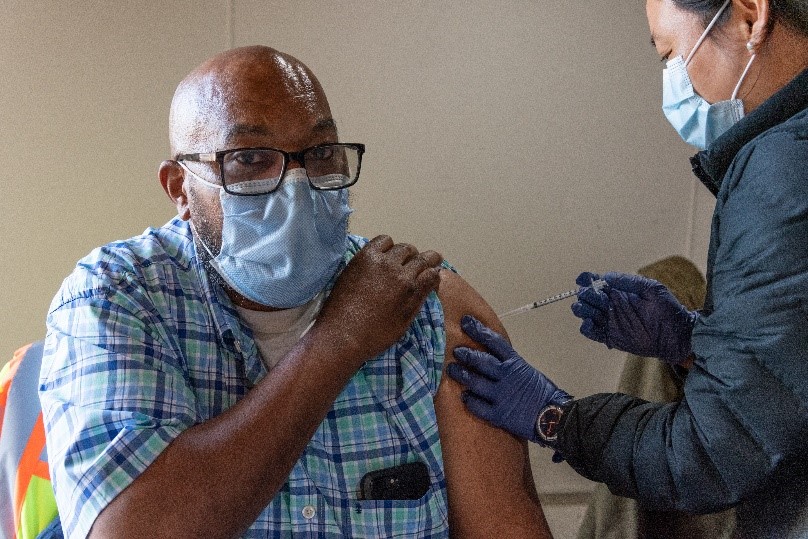
An SFMTA staff person receives the COVID-19 vaccine at the Woods Muni Maintenance Division
To address operator shortages due to the city’s mandate that only vaccinated employees may work after November 1, the SFMTA will temporarily suspend “short” line service on a few Muni lines. Short service refers to buses that run on a segment of a longer Muni route to help improve frequency on higher-ridership portions of the line. The long routes on these lines will continue to operate, connecting customers where they need to go. There will be no cancellation of any Muni routes in response to staffing challenges associated with the city’s vaccine mandate.
Starting November 1, we are planning to temporarily suspend the 1 California Short, 14R Mission Rapid Short (weekends only), 30 Stockton Short, and 49 Van Ness Short (on weekdays only). These changes are intended to reduce impacts to service systemwide, but customers may experience additional crowding and longer wait times on various bus routes as a result. These changes may impact also NextMuni predictions.
Why These Routes
We made the difficult decision to cut the supplemental short line service because it may be temporarily eliminated without jeopardizing access to any stops or connections along the full route. Based on feedback we received from the public regarding service planning for early 2022, we heard that priorities include preserving and restoring connections and service in hilly areas, as well as ensuring ongoing access for people with disabilities and seniors. Temporarily suspending short service allows us to meet these needs while we work to put additional staff in place.
Next Steps
Currently, we don’t have a precise timeline for when we will be able to restore additional service or increase frequencies on these short routes. However, we continue to work with our operators to address their vaccination status so that they can return to work as quickly as possible. We are also hiring and training new operators.
We are moving forward with additional Muni service in early 2022, pending approval by the SFMTA Board of Directors on December 7. At the same time, we will continue to adjust operations in response to operator availability.
We appreciate your patience as we work to address the vaccination mandate. We will keep customers and the public updated. For the latest, please follow us on Twitter @sfmta_muni or Facebook.
Published October 28, 2021 at 03:41AM
https://ift.tt/3nDQFi6
Show HN: Guestio – A better way to find and book guests to interview https://ift.tt/3jL9sal
Show HN: Aussie++, an Australian programming language written in Rust https://ift.tt/3vSwKjt
Show HN: Great Lakes Data Visualization Beta https://ift.tt/3bgeQNM
Show HN: Static blog generator in about 1.2KLOC https://ift.tt/3mlYJEI
Show HN: RODB – generates APIs from static data (CSV, XML, JSON...) https://ift.tt/3bhClpO
Show HN: Privacy-first, minimal and blazing-fast blogging/newsletter platform https://ift.tt/3jDM1iT
Show HN: xn--gda.at – another URL shortener written in only HTML https://ift.tt/3bg7avi
Optimización de SEO para tiendas en línea: Guía completa
Optimización de SEO para tiendas en línea: Guía completa El SEO no es solo importante para las páginas web tradicionales; también es crucial...

-
Watch video on YouTube here: https://youtu.be/PzDZWY6mgGg
-
Watch video on YouTube here: https://youtu.be/3tGZ-bSpFWE
-
Watch video on YouTube here: https://youtu.be/ntljnJmlIv0


