martes, 19 de octubre de 2021
Show HN: A habit tracking tool, GitHub-calendar style https://ift.tt/3naAusv
Show HN: Sublime Text-style screencasts in Go https://ift.tt/3AUNkjn
Show HN: SKUSavvy: a state of the art end-to-end warehousing and fulfillment app https://ift.tt/3ASFg2x
Show HN: CanIPhish – Phishing Simulation SaaS Platform [Freemium] https://ift.tt/3B1lLoy
Street Transformations to Address COVID-19 Keep San Francisco Moving
By Eillie Anzilotti
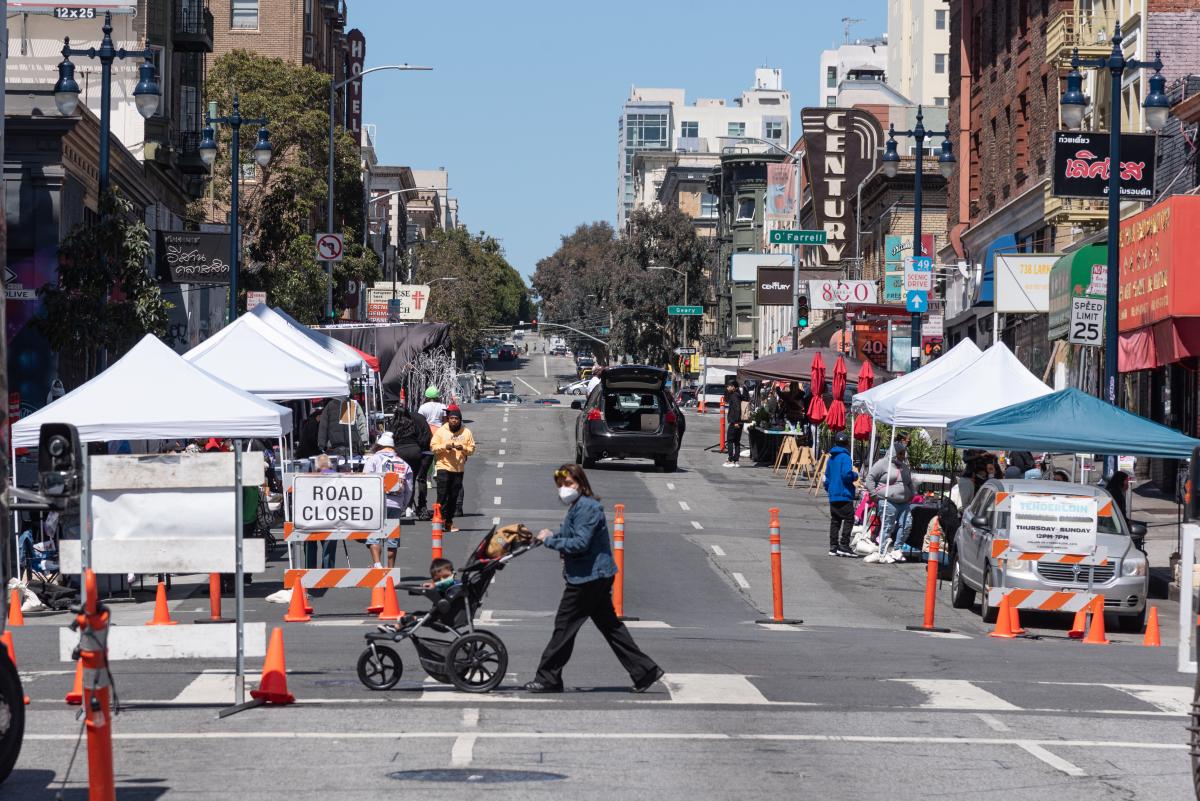
A street closure in the Tenderloin as part of the COVID-19 response efforts.
Since the start of the COVID-19 pandemic in March 2020, many aspects of people’s lives have changed – including how we get around town. To reflect this new reality, the SFMTA pivoted in the way we design and operate our streets. From streets that prioritized people walking and bicycling in some of San Francisco’s major parks to Temporary Transit Lanes (TETLs) that protected Muni lines from the return of traffic congestion, San Francisco reimagined how streets could be used for people.
We have documented some of these transformations in a new report that highlights emergency street operations, Temporary Emergency Transit Lanes, the Slow Streets Program, Tenderloin street closures and reusing streets within or close to parks for recreational purposes. Within each effort, the report touches on the ways in which city programs have been responsive, equitable and people-centered.
Some highlights of our COVID-19 response work over the last year include:
- The SFMTA implemented over 700 street changes to remove parking and close streets based on the request of essential service providers, including medical care, food banks, testing sites and more. The majority of these requests were filled in less than three days.
- 12.5 miles of Temporary Emergency Transit Lanes (TETLs) were installed, significantly reducing travel times for tens of thousands of riders. For instance, after transit lanes were installed, transit travel times on Mission Street in the South of Market neighborhood stayed constant, even as traffic volumes increased by 20%. Travel times on the 14 Mission and 14R Mission Rapid are now 20% faster than pre-pandemic.
- The SFMTA installed 45 lane miles of Slow Streets during the pandemic. On average, traffic volumes decreased by over 50% after Slow Streets treatments were installed, while bicycle ridership increased by over 70%.
- Two miles of safer and calmer street treatments were implemented in the Tenderloin, including block closures for essential services, physical distancing lanes for increased walking space, shared spaces and play streets.
In response to unprecedented circumstances, the SFMTA has delivered a suite of responsive, innovative programs and projects within short timelines. Some aspects of these new programs and projects, such as Slow Street corridors, have demonstrated benefits beyond emergency response and are now moving towards a permanent, post-pandemic future.
Additional programs will continue to be monitored for their value and effectiveness within a rapidly evolving environment. As the pandemic continues and the needs of our streets and residents continue to shift, the SFMTA is committed to keeping San Francisco moving.
Published October 19, 2021 at 11:38PM
https://ift.tt/3n8e5Mo
Show HN: Kubernetes Cost Visibility for Amazon EKS https://ift.tt/3pig8QE
Show HN: Build a MAAS and LXD environment in 30 minutes with Multipass on Ubuntu https://ift.tt/3vrl6eV
Show HN: The Milho Language https://ift.tt/2Z5Bt4Y
Show HN: Backwards qr: a simple way to send data from phones to computers https://ift.tt/3G3lc1q
Show HN: Datree (YC W20): Prevent K8s misconfigurations from reaching production https://ift.tt/2XwDWVG
Show HN: Readini – Bilingual Books with Audio https://ift.tt/3pbQoFI
Show HN: Dim, a open source media manager built with Rust https://ift.tt/3vsrToP
Show HN: A grid based editor for Markdown tables, CSV, Gherkin tables, HTML https://ift.tt/2Z4dcvR
Show HN: Practice speaking any language for free https://ift.tt/3G35fYQ
Show HN: Lazy Words – Learn Spanish on Autopilot from Your Phone https://ift.tt/3aQmzlz
Show HN: An Algorithm to Create a Generalized CSS Selector from 2+ Element https://ift.tt/3jfVcpz
Show HN: Simpler access to your music from the web that looks nice https://ift.tt/3lTana4
lunes, 18 de octubre de 2021
Show HN: Can Social Media Predict Asset Price Movement? https://ift.tt/30zfAeV
Show HN: Result monad for Elixir inspired by Rust Result type https://ift.tt/2Z1c3Fk
Planning for Additional Muni Service in early 2022
By Erin McMillan
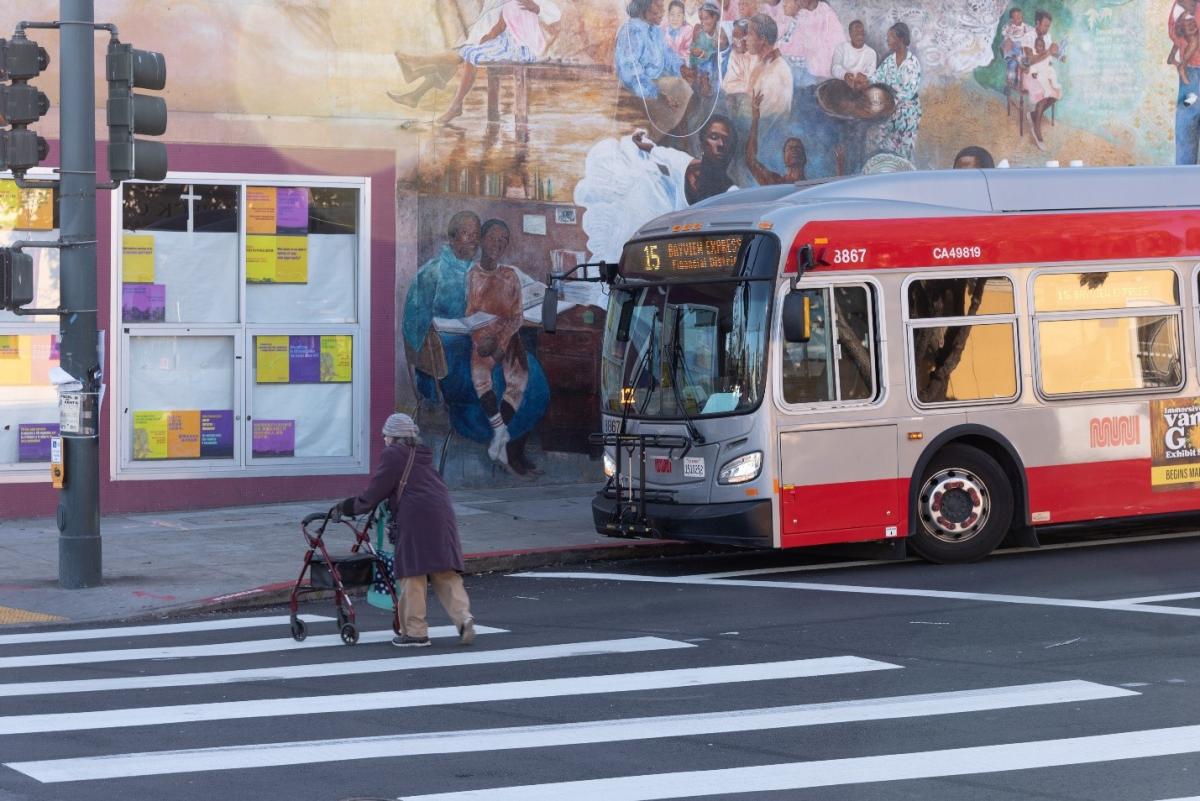 The 15 Bayview Hunters Point Express waits for person crossing the street
Over the past couple of months SFMTA staff have been reaching out for feedback on three alternatives for adding 10% more bus service in early 2022. And we heard you! SFMTA needs to focus on restoring service to provide key connections for people with disabilities and seniors, and that’s what we plan to do. We also heard that there is demand for improving frequency of high-ridership Muni lines to address crowding and wait times, which we'll do with any additional funds.
While we plan for Muni service in early 2022, the city mandate that employees show proof of being fully vaccinated against COVID-19 as a condition of employment will go into effect November 1. We are proud that 82% of SFMTA employees are now fully vaccinated. But if hundreds of our employees are still unvaccinated as of November 1 and are put on leave or terminated, it will significantly impact Muni operations and parking control in San Francisco. This means unexpected gaps in Muni service and lower-than-scheduled frequencies.
While we work on contingency planning for this upcoming challenge, SFMTA staff are taking the feedback we heard about the three alternatives for Muni service additions in early 2022 and developing a proposal that takes into account San Francisco’s priorities for Muni service as well as the potential impacts the vaccine mandate could have on service over the next months. An early 2022 Muni Service Network proposal is expected in early November.
In our survey about expanding Muni service, we presented three alternatives.. Each of these options would go into effect in early 2022. We wanted to learn if Muni customers prefer restoring the seven all-day bus routes that were temporarily suspended since the pandemic started, or whether the resources used to operate those routes would be better used to increase frequency on nearby busy routes to reduce crowding and wait times.
At over 30 stakeholder meetings, neighborhood festivals and pop-ups, and in an online, telephone and in-person survey that received over 4,500 survey responses, we asked the public to balance trade-offs between access and frequency to help us decide how to use available resources for Muni service in early 2022.
We received a significant amount of detailed feedback. For example, some J Church riders find the new surface-only alignment that has addressed delays caused by subway congestion inconvenient, as it means transferring for downtown destinations. Seniors in Japantown are missing a connection to low-cost food service at the Jewish Community Center. People with disabilities and seniors wanted easier and more direct access to St. Mary’s Medical Center.
Now our transit planning team is applying what we heard to develop a proposal that would go to the SFMTA Board for consideration in December. SFMTA staff are sharing what we heard with the public from the survey at Open Houses and Office Hours and will be seeking policy guidance from the SFMTA Board and San Francisco Board of Supervisors in October and November.
As we navigate what the future holds for SFMTA Muni service, we also must identify sustainable long-term revenue sources. In adjusting Muni service, we must make our remaining one-time relief funding from the federal government last until 2024. Without additional revenue, we risk drastic service cuts as soon as 2023. In tandem with our efforts to restore Muni service that best serves San Francisco’s needs, we will be working to identify a path forward for sustainable, long-term funding.
We will keep customers and the public updated about changes to Muni service over the next months. For information about plans for service in early 2022, please visit the 2022 Muni Service Network webpage.
Published October 19, 2021 at 12:50AM
https://ift.tt/3lSoah6
Show HN: Computational Playground Design Tool [video] https://ift.tt/2YXBZBS
Show HN: A Byte of Coding – A curated newsletter of programming articles https://ift.tt/2YYAYtP
Show HN: I trained a neural network to write scam emails https://ift.tt/3FY7EUY
Show HN: Proton Player – Build your own mobile-friendly HTML5 music player https://ift.tt/3BT7ews
Show HN: Social media where you get paid for helping people https://ift.tt/3n95A3C
Panel JARVIS: Diseñando tu Centro de Control de IA Local Avanzado
Panel JARVIS: Diseñando tu Centro de Control de IA Local La Inteligencia Artificial (IA) se ha posicionado como la fuerza motriz de la tra...

-
Watch video on YouTube here: https://youtu.be/PzDZWY6mgGg
-
Watch video on YouTube here: https://youtu.be/3tGZ-bSpFWE
-
Watch video on YouTube here: https://youtu.be/ntljnJmlIv0


