

miércoles, 21 de abril de 2021
Show HN: Wiggleface, a silly game engine for my students https://ift.tt/2QdX2wc

Show HN: Instant Vitals – Easily track your Web Vitals metrics https://ift.tt/3n7rBiO
Show HN: Exactly-once delivery counter using Watermill messaging library https://ift.tt/3eiJZ4y
Show HN: High-speed UTF-8 validation in Rust https://ift.tt/3ateSC6
Show HN: Sheet2dict – simple Python XLSX/CSV reader/to dictionary converter https://ift.tt/32A2uMo
Show HN: I made a mobile video player for Japanese language learners https://ift.tt/3tGSzAC
Show HN:I personally created a web service in japan. Please review if you like. https://ift.tt/3nhJH21
martes, 20 de abril de 2021
Show HN: I built a tool to magically remove unwanted elements from photos https://ift.tt/3svzY9a
Show HN: Mongita is to MongoDB as SQLite is to SQL https://ift.tt/32xvpAM
Show HN: RoundedProgressBar – Android ProgressBar w individually rounded corners https://ift.tt/2QmhomG
Show HN: I'm working on a open-source, self-hosted alternative to Disqus https://ift.tt/3syzK0X
Show HN: Example C++ app using Hjson, CMake and Qt 5 https://ift.tt/3dw5pvH
Bringing Back Muni Better
By Julie Kirschbaum
Much of Muni service has already been restored since the pandemic-related service reductions at the beginning of the crisis, thanks to the dedication of SFMTA staff. As San Francisco emerges from the pandemic, we continue to increase service by focusing on maximizing citywide Muni access while providing high frequency on the city’s busiest routes.
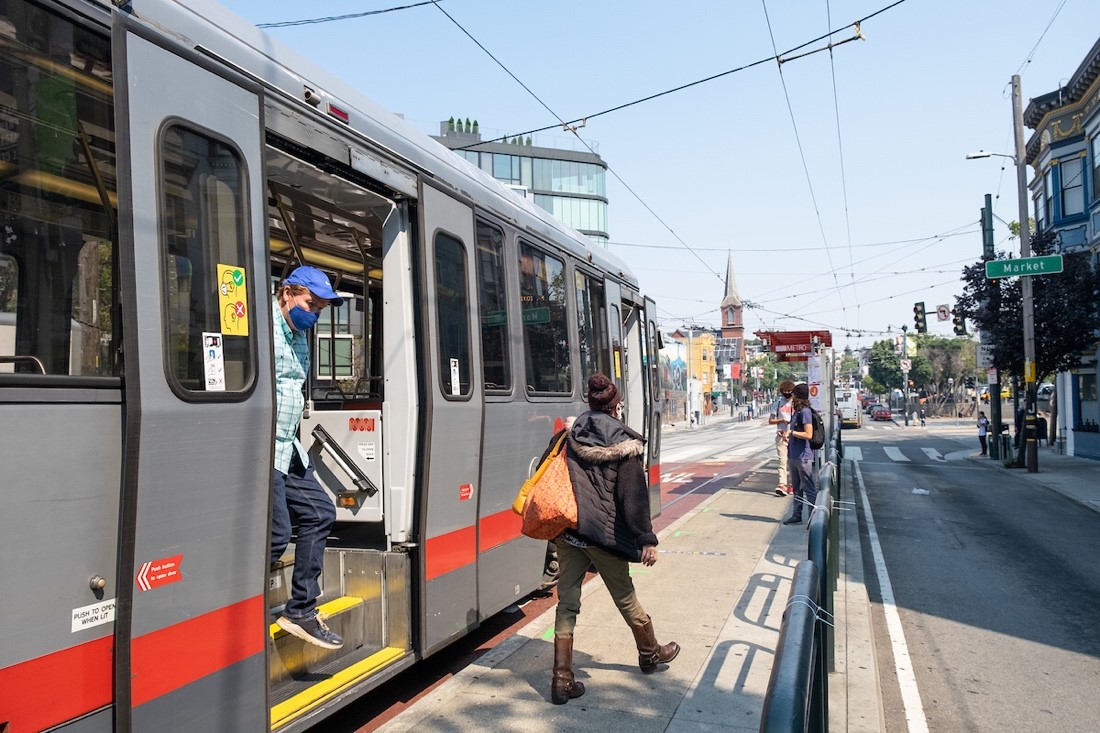
The J Church returned as a surface route from Balboa Park to Duboce Avenue in December 2020
Since January 23, 91% of San Franciscans are within 2-3 blocks of a Muni stop. And this includes 100% of residents in San Francisco’s neighborhoods identified in the Muni Service Equity Strategy.
On May 15, Muni Metro service will be restored in the subway, providing subway service at all stations from Embarcadero to West Portal. The K Ingleside and the T Third will once again be “interlined,” operating as one route from Balboa Park to Sunnydale. The N Judah is also returning to rail service, giving customers more room and fewer pass ups, as the two-car train increases the N Judah’s capacity. F Market & Wharves service will return 7 days a week, 11 a.m. to 7 p.m. And, a hilltop gap will be closed between Forest Hill and Glen Park with the temporary 36-52 Special Shuttle bus.
SFMTA staff are working hard and fast to overcome constraints to restoring service, and we expect to be able to expand service so that 98% of San Franciscans will be within 2-3 block of a Muni stop by the end of the summer. Here’s how.
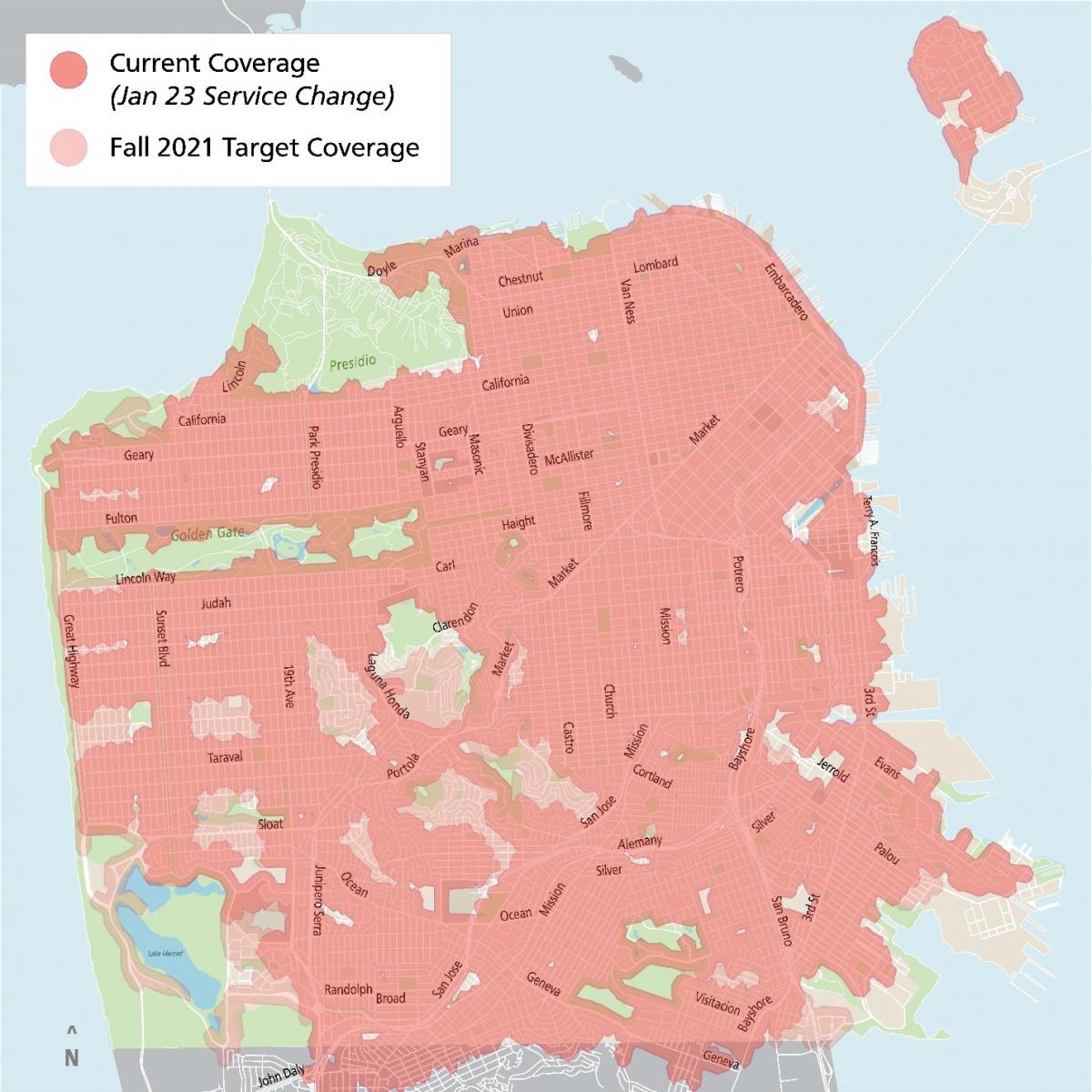
As of January 23, 2021, 91% of San Franciscans are within 2-3 blocks of a Muni stop. We expect 98% of San Franciscans to have this access by the end of summer.
Vehicle Capacity and Availability Limits
As public health officials monitor San Francisco’s decreasing COVID-19 case numbers and increasing COVID-19 vaccination rates, we are working closely with the Department of Public Health to determine when distancing restrictions should be lessened, allowing more customers on each bus and train.
When distancing requirements are no longer needed, each Muni bus and train will be able to carry up to three times more customers comfortably. We will also return to industry standards of cleaning vehicles at the end of the day and stop our pandemic practice of returning a vehicle at the end of each operator’s shift for sanitization that currently limits vehicle availability.
Additionally, buses are currently substituting for Muni Metro lines while work on the first part of the Subway Renewal Program is completed, that is further reducing vehicle availability. The SFMTA maintenance, engineering and technology teams have worked hard over the last 10 months to ensure that the subway will open up with better reliability, as well as important customer facing amenities such as Wi-Fi and new station signage at Church and Castro. In May, the bus substitution will not be needed on the N Judah and K Ingleside lines and can then be used on other routes.
Muni Staffing and Funding
Also, essential to providing great Muni service is retaining staff talent. Due to a 15% vacancy rate pre-pandemic across the agency and very limited hiring over the past year, we have vacancies in many service critical positions from mechanics to supervisors. Before we can restore more service, we need to conduct exams, hire and train. Additionally, a high wave of June retirements is expected due to a reduced number of retirements during the pandemic. Since we are expecting a challenging summer due to high promotions and attrition, we are restoring Muni service with a schedule that can be filled 100% with available operators without gaps going forward. We want to make sure that as we start up service, we can sustain it long term.
In the short term, with ridership expected to take several years to reach pre-pandemic levels, we will be able to meet the city’s transit needs without over-extending our resources. However, I am confident that if we bring back Muni service that is reliable and convenient, demand will return stronger than ever.
Thanks to our diligent teams, we are making cost efficient improvements to Muni service. SFMTA staff looked closely where we had vulnerabilities and talked openly about how to learn from past mistakes. Union leadership has fought tirelessly for the needs of their team members and show up every day to solve tough problems. From headway management to installing temporary emergency transit lanes, we are creating an enhanced customer experience that will foster financial sustainability for the long term.
While we are on our way to increasing service, getting Muni back to 100% of pre-pandemic service — not to mention any increases—requires more sustained funding. Even before the pandemic, the agency had seen declining revenues from parking fees and transit fares. Now, with ridership slow to return to past levels and tax revenues down, our future is even less clear. One-time federal funding has saved the SFMTA from devastating cuts and layoffs, but this one-time funding runs out in 2023 and doesn’t solve the long-term funding challenge.
The SFMTA is exploring several options including revenue measures to secure our future. And while we plan to passionately pursue expanded funding, we will not expand service beyond what we can sustain with ongoing revenue to protect jobs and prevent future layoffs.
Muni is more than a transit system—it's a core part of our community and fabric of our city. Our staff is committed to keeping San Francisco moving and is working hard to bring Muni service back better than ever.
Published April 20, 2021 at 07:34PM
https://ift.tt/3v3KLJk
Show HN: Peachy Pay – Improving the health of patients and providers https://ift.tt/2P9xcsC
Show HN: Manuzoid – Database of More Than 1M Manuals https://ift.tt/2P4shci
Show HN: Just launched my online learning startup (3 years solo indie hacking) https://ift.tt/3tvjVtc
Show HN: Curated Moon site to learn why explore the Moon as we send humans again https://ift.tt/2RQryfZ
Show HN: The simplest React state manager now at stable release https://ift.tt/2QiS9BJ
Show HN: Built a secure 100% serverless WeTransfer replica in one day using AWS https://ift.tt/2QGb0qc
Show HN: Shepherd.com – Discover books in a new way, like wandering a bookstore https://ift.tt/3n21Xfq
Show HN: Ruby code and tools for animating Voronoi diagrams https://ift.tt/2P4T3kX
lunes, 19 de abril de 2021
Show HN: Melange – Bet on Anything https://ift.tt/3xjH1FE
Welcome Back to the Westside, K Ingleside Trains!
By
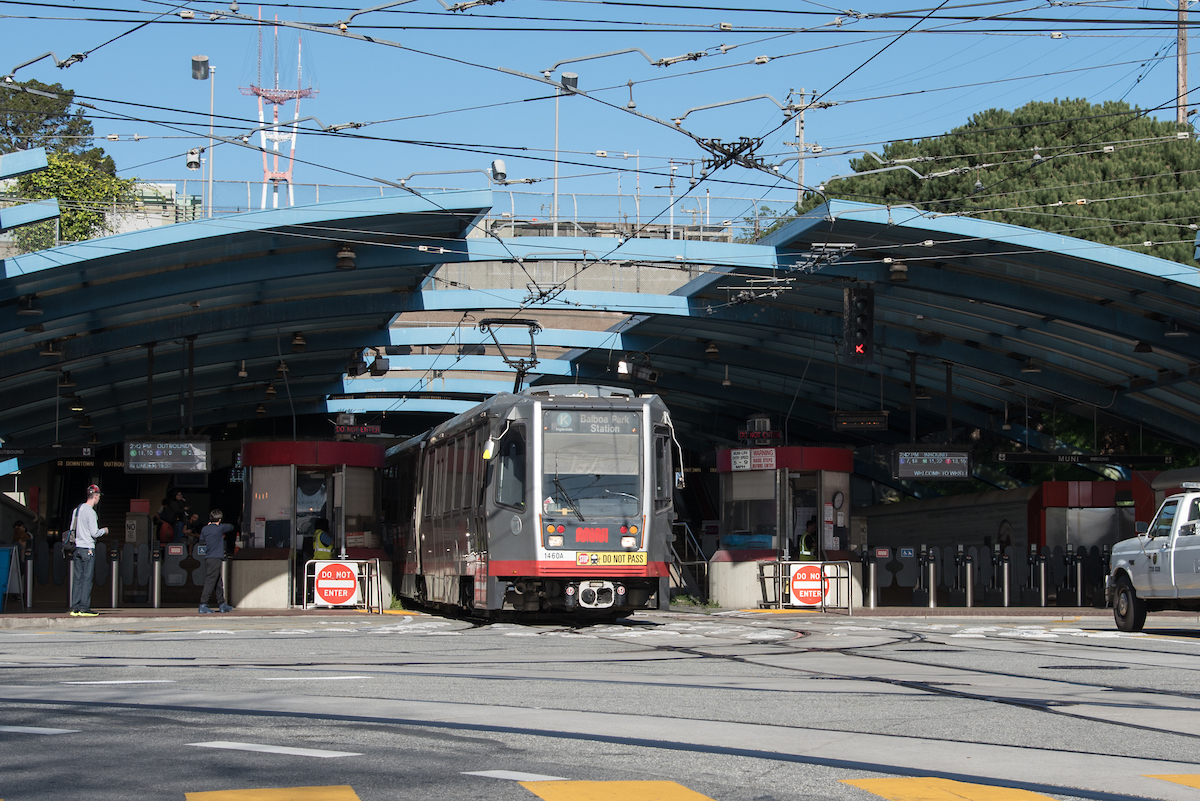
The K Ingleside exiting the subway at West Portal
On April 16, the SFMTA, along with Mayor Breed and District 7 Supervisor Myrna Melgar, announced that Muni’s K Ingleside trains will return to the westside starting May 15.
The return of these trains is happening much earlier than anticipated thanks to the hard work of SFMTA staff to find creative solutions to ramp up Muni service to riders and support the city’s economic recovery.
“This addition of Muni service is a true testament to the collaboration between Muni staff, our labor unions and community partners,” said Julie Kirschbaum, SFMTA Director of Transit. “We know that key transit connections are critical to the city’s economic recovery, and we’re thrilled to re-open the subway and ramp up service.”
The K Ingleside will join the previously-announced N Judah as part of Muni Metro’s reopening, highlighting the agency’s commitment to maximizing transit access citywide. Recent subway repairs enable the K Ingleside to be interlined with the T Third line and run through a much more reliable subway system.
The pandemic enabled us to accelerate other upgrades and necessary maintenance work, provided by a rare, extended subway shutdown. These are part of the Subway Renewal Program, a systematic approach to upgrades over the next 10 years that addresses both longstanding issues predating the pandemic and other issues uncovered since the shelter-in-place began.
Key improvements include:
- Wi-Fi availability for customers from routers installed in stations and cellular antennas installed in the tunnels
- Installation of new wayfinding and directional signs at Castro and Church stations
- Quicker and smoother trips as a result of overhead line enhancements and rail grinding
The return of K Ingleside rail service is only one part of a larger roll out of Muni Metro rail updates happening May 15:
K Ingleside/T Third
K Ingleside and the T Third will once again be “interlined.” This means that the two routes will operate as one route, from Balboa Park to Sunnydale, providing subway service at all stations from Embarcadero to West Portal.
N Judah
The N Judah is also returning to rail service. Riders will have more room and fewer pass ups, as the two-car train increases the N Judah’s capacity.
J Church, L Taraval and M Oceanview
These lines will all continue to operate as they currently do, though the increased capacity on the K/T trains will soon provide even better connections for those traveling downtown or to the western neighborhoods.
- The J Church will remain as a surface-only route from Duboce Avenue to Balboa Park
- The L Taraval will operate with buses from the Zoo to Downtown
- The M Ocean View will operate with buses from Balboa Park to West Portal Station.
Published April 20, 2021 at 01:43AM
https://ift.tt/2RIMvJv
Muni Emergency Measures Point to Longer Term Transit Goals
By
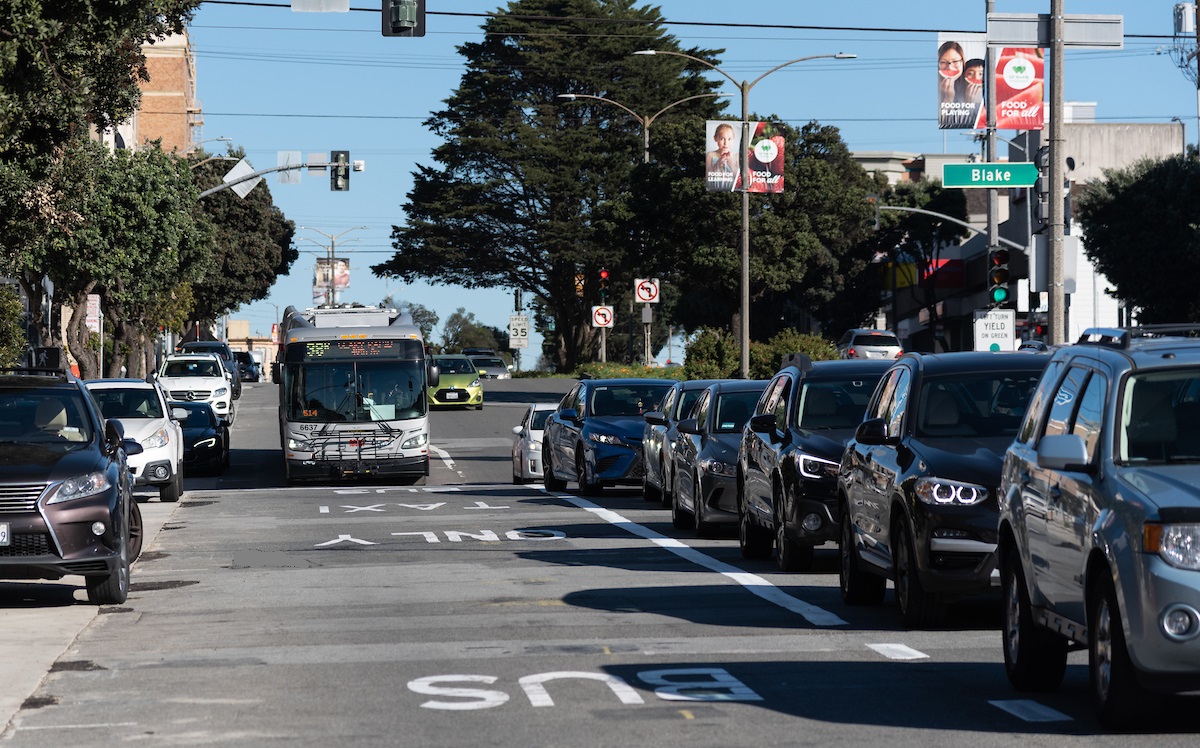
The 38 Geary Temporary Emergency Transit Lane
Muni is a core part of our community’s urban fabric that, like so much, has been upended by the pandemic. Yet, as hard as the last year has been, the SFMTA is focused on bringing Muni back better than ever. As we shift to focus on recovery, we’re looking closely at the emergency efforts we’ve implemented during the pandemic and how their proven effectiveness can help support San Francisco long-term.
This includes promising performance data from our Temporary Emergency Transit Lanes program and plans for service restoration and future improvements. As part of an emergency response over six miles of temporary emergency transit lanes have been installed, benefitting tens of thousands of Muni customers each day, and helping to protect key Muni corridors from traffic. With the prioritization of temporary emergency transit lanes on routes that serve neighborhoods identified by the Muni Service Equity Strategy, the goal is to protect low-income and historically underserved people traveling on Muni from traffic congestion as the economy reopens and traffic returns.
Recent Muni Forward improvements are working: where we have invested in improvements like transit lanes, transit signal priority and bus bulbs, Muni customers are experiencing quicker and more reliable trips. When more people choose Muni because it’s fast and reliable, there are fewer cars on the street, reducing traffic congestion and greenhouse gas emissions.
Temporary Emergency Transit Lane Program Benefits Riders
Several transit lanes have already been in place long enough to collect substantive data, and the results are showing benefits to Muni riders. The success of these corridors - Geary, 4th Street Bridge, 7th and 8th Streets and Mission Street in SOMA – show how beneficial making investments in transit can be.
Here’s a quick run-down of each of their successes.
Mission Street in SOMA was our very first Temporary Emergency Transit Lane project and it is showing amazing results. The project took rush hour-only transit lanes and made them full-time. Here’s what we’ve learned:
- Though traffic is 20% higher than in the summer of 2020, transit times are fairly consistent and only show a difference of 2 to 4% showing that bus travel times are being protected despite an increase in traffic
- A public survey showed 65% of respondents support making the changes of the transit lanes permanent
A 2-week online open house will be held Monday, April 19, through Monday, May 3, to inform the community of the outcome of the evaluation of the temporary project, and changes made based on feedback, prior to pursuing permanent legislation in June. For more information, visit SFMTA.com/TempLanes14.
Geary Boulevard (Richmond District)
Building upon the implementation of the Geary Rapid Project in the eastern half of the corridor, Geary Boulevard west of Stanyan is benefiting from new temporary emergency transit lanes, Muni head start signals and wooden bus bulbs. The data shows:. The data shows:
- Muni speeds have stayed consistent or even increased despite increases in traffic
- The biggest improvements have been for inbound 38R Geary Rapid passengers, whose trip got faster and more reliable across all times of day, with a 6% improvement in reliability in the morning rush hour commute
T Third riders have long experienced delays near 4th and King Station – in front of Caltrain. New transit lanes on the 4th Street bridge, however, are showing real promise.
- Transit delay at the 4th and Berry intersection has decreased by over 60%, and less than 1% of trains are impeded by auto traffic thanks to the new Temporary Emergency Transit Lanes
- Trains are 2.5 times more likely to cross 4th and Berry, the intersection between the bridge and Caltrain, without stopping for a red light
- When trains do wait for a green light, the average wait is 70% shorter
Serving the 19 Polk, much of 8th Street and a smaller slice of 7th Street received temporary emergency transit lanes early in the pandemic. In fact, the project has been so successful, we have rerouted the 27 Bryant over to 7th and 8th in SOMA to take advantage of the time savings and improve reliability for the entire line. On this corridor, we’re seeing:
- 20% improvement in the 19 Polk’s on time performance despite a 35% increase in mixed traffic since April 2020
- No recorded instances of crowding on the 19 Polk line, despite a 33% increase in ridership since the beginning of the pandemic, thanks in part to the headway reliability that the temporary emergency transit lanes support (reduced gaps and bunches that contribute to crowding)
- Transit lanes have not caused traffic congestion to substantially deteriorate, demonstrating that transit benefits don’t need to negatively impact drivers
As the city reopens and traffic returns, temporary emergency transit lanes are being evaluated on their effectiveness with the goal of making the benefits of the temporary emergency lanes permanent.
Future Service Improvements
The benefits to Muni through the success of the temporary emergency transit lanes projects need to be protected. The success of the program is encouraging the SFMTA to pursue permanent changes along several of these corridors. Importantly, any long-term changes will incorporate public feedback to tweak the designs to better match emerging neighborhood needs. Making the Muni benefits we have seen through the Temporary Emergency Transit Lanes program permanent is one way that we can emerge from the pandemic stronger than before.
Legislation for permanent transit lanes on Geary and Mission Street in SoMa is under consideration.
In addition, two more temporary emergency transit lanes projects are being considered for approval by the SFMTA Board of directors today:
Finally, we’re taking advantage of the current environment to advance major construction projects that will deliver long-planned (and long-delayed) improvements.
These include:
- The Subway Renewal Program
- L Taraval Improvement Program
- 16th Street Improvement Project
- 19th Avenue Combined City Project
All of these will add up to very real improvements for transit riders. If you want to learn more, check out this presentation prepared for the April 20, 2021 meeting of the SFMTA’s Board of Directors.
Published April 20, 2021 at 01:16AM
https://ift.tt/3apbWX8
Show HN: I made a Hacker News for automotive industry https://ift.tt/3x6ywh1
Domina la Generación de Contenido SEO: Guía Avanzada con Ollama y Claude
Potenciando el Contenido SEO: La Sinergia entre Ollama y Modelos Avanzados La creación de contenido de calidad y optimizado para motores de...

-
Watch video on YouTube here: https://youtu.be/3tGZ-bSpFWE
-
Watch video on YouTube here: https://youtu.be/PzDZWY6mgGg


