Compras a menudo en Amazon?? Pincha aquí!!!


ViewGrip: #1 Free Youtube Views, Likes & Subscribers


Powered by Restream.io


viernes, 19 de febrero de 2021

Show HN: Augmented Reality Route Setting for Climbing https://ift.tt/3bqGtU4

Show HN: Augmented Reality Route Setting for Climbing https://www.youtube.com/watch?v=_z9797LFm4c February 19, 2021 at 07:35PM

Show HN: Crypto Mining Pools Aggregator https://ift.tt/3uc77J0

Show HN: Crypto Mining Pools Aggregator https://ift.tt/3azwIUD February 19, 2021 at 03:03PM

Free Muni and Paratransit to COVID-19 Vaccine Appointments

Free Muni and Paratransit to COVID-19 Vaccine Appointments
By Phillip Pierce
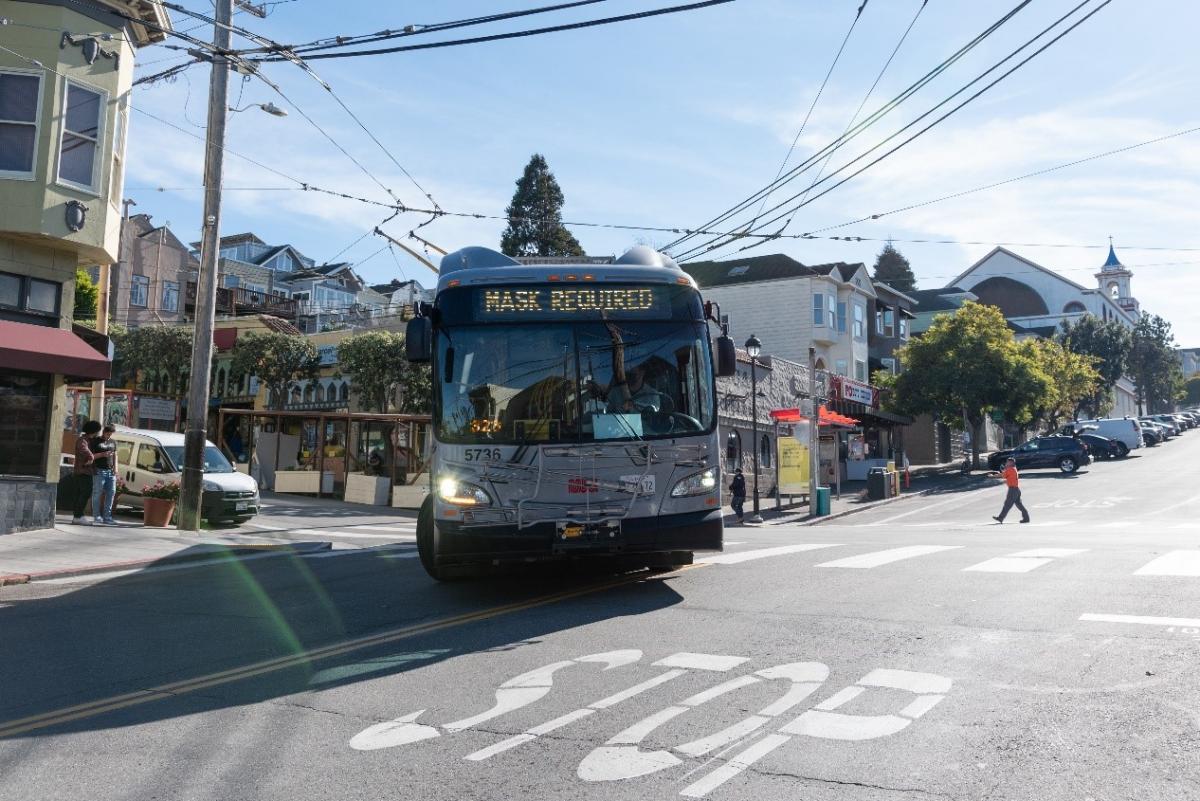
image of bus with headway sign stating "masks required"

Free Muni and Paratransit to COVID-19 Vaccine Appointments

Starting on Tuesday, February 23, Muni and Paratransit will be free for those traveling to get vaccinated for COVID-19. This includes trips in both directions. The SFMTA is also providing additional access to taxi service for those who use the Essential Trip Card.

These rides are good for trips to the city-sponsored high-volume vaccine sites, hospitals or anywhere else that is offering vaccines. More information on the city-sponsored sites as well as directions on how to get there can be found on the city vaccination website.

We know that getting San Franciscans vaccinated is the city’s highest priority. This program is designed to eliminate transportation and cost barriers to receiving this life-changing vaccine.

How to Ride on Muni

Use our trip planner or service map to find the best way to get to your vaccination destination. Simply catch the bus and head to where you need to go. Please have your vaccine appointment confirmation or instructions ready in case SFMTA staff asks to see your proof of payment.

Paratransit

Paratransit rides on SF Access van service to and from vaccination appointments will be free for eligible participants. Paratransit van riders must call to make a trip reservation and indicate that they are going to get their COVID-19 vaccine. Staff will make a note in their records to alert the driver that the rider does not need to pay a fare for their trip.

Paratransit taxi riders will have $60 loaded onto their taxi debit card, which will be valid for up to six months, to get to and from their vaccine appointment. Funds should be available starting next week. If you are a paratransit taxi rider and have a question about the value on your card or want to confirm if the additional value has been added, you may call 415.351.7000 or check your card’s transaction history on the SF Paratransit Taxi online portal. 

More information can be found on the SFMTA Paratransit website.

Essential Trip Card

The Essential Trip Card (ETC) already subsidizes about two to three round trips by taxi per month for older adults (persons 65 and older) and people with disabilities. Eligible participants pay 20% of the taxi fare for essential taxi trips. To pay, each rider is issued an ETC debit card, which they can load with value every month.  If ETC participants think that the cost of their trips to vaccine appointments will require more funds than they can currently load each month, they can add $60 of additional funds, at the cost of $12 to the rider, one time only. Existing ETC customers can add this new value on-line, by phone or by mail, same as usual. New applicants can sign-up by calling 311.


Published February 19, 2021 at 07:40PM
https://ift.tt/3sdPCWL

Launch HN: MindsDB (YC W20) – Machine Learning Inside Your Database https://ift.tt/2ZuqrTN

Launch HN: MindsDB (YC W20) – Machine Learning Inside Your Database Hi HN, Adam and Jorge here, and today we’re very excited to share MindsDB with you ( https://ift.tt/2UJWtY6 ). MindsDB AutoML Server is an open-source platform designed to accelerate machine learning workflows for people with data inside databases by introducing virtual AI tables. We allow you to create and consume machine learning models as regular database tables. Jorge and I have been friends for many years, having first met at college. We have previously founded and failed at another startup, but we stuck together as a team to start MindsDB. Initially a passion project, MindsDB began as an idea to help those who could not afford to hire a team of data scientists, which at the time was (and still is) very expensive. It has since grown into a thriving open-source community with contributors and users all over the globe. With the plethora of data available in databases today, predictive modeling can often be a pain, especially if you need to write complex applications for ingesting data, training encoders and embedders, writing sampling algorithms, training models, optimizing, scheduling, versioning, moving models into production environments, maintaining them and then having to explain the predictions and the degree of confidence… we knew there had to be a better way! We aim to steer you away from constantly reinventing the wheel by abstracting most of the unnecessary complexities around building, training, and deploying machine learning models. MindsDB provides you with two techniques for this: build and train models as simply as you would write an SQL query, and seamlessly “publish” and manage machine learning models as virtual tables inside your databases (we support Clickhouse, MariaDB, MySQL, PostgreSQL, and MSSQL. MongoDB is coming soon.) We also support getting data from other sources, such as Snowflake, s3, SQLite, and any excel, JSON, or CSV file. When we talk to our growing community, we find that they are using MindsDB for anything ranging from reducing financial risk in the payments sector to predicting in-app usage statistics - one user is even trying to predict the price of Bitcoin using sentiment analysis (we wish them luck). No matter what the use-case, what we hear most often is that the two most painful parts of the whole process are model generation (R&D) and/or moving the model into production. For those who already have models (i.e. who have already done the R&D part), we are launching the ability to bring your own models from frameworks like Pytorch, Tensorflow, scikit-learn, Keras, XGBoost, CatBoost, LightGBM, etc. directly into your database. If you’d like to try this experimental feature, you can sign-up here: ( https://ift.tt/3uhw05U ) We currently have a handful of customers who pay us for support. However, we will soon be launching a cloud version of MindsDB for those who do not want to worry about DevOps, scalability, and managing GPU clusters. Nevertheless, MindsDB will always remain free and open-source, because democratizing machine learning is at the core of every decision we make. We’re making good progress thanks to our open-source community and are also grateful to have the backing of the founders of MySQL & MariaDB. We would love your feedback and invite you to try it out. We’d also love to hear about your experience, so please share your feedback, thoughts, comments, and ideas below. https://ift.tt/3k6zsfm or https://mindsdb.com/ Thanks in advance, Adam & Jorge February 19, 2021 at 05:55PM

Launch HN: HiGeorge (YC W21) – Real-time data visualizations for public datasets https://ift.tt/2NGzfTM

Launch HN: HiGeorge (YC W21) – Real-time data visualizations for public datasets Hi HN! Anuj here. My co-founder Amir (Aazo11) and I are building HiGeorge ( https://hi-george.com/ ). We make localized drag-and-drop data visualizations so that all publishers, even the small ones, can better leverage data in their storytelling. Think Tableau with all the necessary data attached. At the onset of the pandemic Amir and I were looking for local data on the spread of the virus. We visited the sites of large national newsrooms like the NYTimes and were impressed by the quality of data visualizations and maps, but they lacked the geographic granularity for our own neighborhood. We then turned to our local newsrooms but found they presented data in tables and lists that made it difficult to comprehend the virus’ spread and trends. We wondered why. After talking to local journalists and publishers, we found that newsrooms simply do not have the resources to make sense of large datasets. Public datasets are hard to clean, poorly structured, and constantly updated. One publisher explained to us that she would refresh her state health department’s website 5 times a day waiting for updated COVID data, then manually download a CSV and clean it in Excel. This process could take hours, and it needed to happen every day. This is where HiGeorge comes in. We clean and aggregate public datasets and turn them into auto-updating data visualizations that anyone can instantly use with a simple copy/paste. Our data visualizations can be drag-and-dropped into articles, allowing news publishers to offer compelling data content to their communities. Check out a few versions of what we’re doing with customers -- COVID-19 data reporting at North Carolina Health News [1], COVID-19 vaccine site mapping at SFGATE [2], real-time crime reporting in Dallas, TX [3], and police use of force at Mission Local [4]. Today, HiGeorge works with dozens of newsrooms across the country. Our visualizations have driven a 2x increase in pageviews and a 75% increase in session duration for our partner publishers. We charge a monthly subscription for access to our data visualization library – a fraction of the cost of an in-house data engineer. In the long run, we are building HiGeorge so that it becomes the single place to collaborate on and publish data content. We’d love to hear from the HN community and we’ll be hanging out in the comments if you have any questions or feedback. [1] https://ift.tt/3k10ZPa... [2] https://ift.tt/3k8D6oL... [3] https://ift.tt/3aBfXbs... [4] https://ift.tt/2M5IVGZ February 19, 2021 at 04:57PM

jueves, 18 de febrero de 2021

Show HN: Archive as you browse, store locally and/or share with others via IPFS https://ift.tt/3qAQ01d

Show HN: Archive as you browse, store locally and/or share with others via IPFS https://archiveweb.page February 19, 2021 at 03:04AM

Virtual Parade and New Central Subway Art Ring in Lunar New Year

Virtual Parade and New Central Subway Art Ring in Lunar New Year
By Sophia Scherr

We are entering the year of the Ox, typically symbolizing hard work, positivity, and honesty. This year the SFMTA will continue the tradition of celebration with the virtual San Francisco Chinese New Year Parade  on February 20th at 6 pm on KTVU.

Celebrating Lunar New Year and the San Francisco Chinese community has been a long-standing tradition for many of us. In 1849, San Francisco’s population swelled to 50,000 and many of the new residents were Chinese immigrants, coming to work in gold mines or on railroad lines. By the 1860’s, the Chinese were eager to share their culture with others and the annual tradition of parade and pageantry was born. A variety of other cultural groups throughout the city were invited to participate, and they marched down what today are Grant Avenue and Kearny Street with colorful flags, banners, lanterns, and drums and firecrackers to drive away evil spirits. The city’s Chinese New Year Parade is one of the largest celebrations of its kind in the world, attracting over three million spectators and television viewers throughout the U.S., Canada and Asia.

In line with what the year of the Ox signifies, we also look forward to seeing our work come to fruition when the Central Subway Project's Chinatown - Rose Pak station opens in 2022. As part of this milestone, the SFMTA in partnership with SFAC’s Public Art Program, the Chinese Culture Center, Chinatown Community Development Center, and the Chinese Historical Society have envisioned a vibrant art program for Chinatown’s station. Three significant prominent artworks by artists Tomie Arai, Yumie Hou and Clare Rojas are being installed, infusing the quintessential Chinatown spirit into their works, connecting the past, present and future. These artworks also serve as wayfinding – from marking the entrance to the station, to signaling to riders their arrival at Chinatown with placement of prominent works on the platform walls.

image of Chinese "paper cut" art

Traditional Chinese paper cut artist Yumei Hou developed large murals that will adorn the station

Ongoing community involvement is an essential to ensuring that Chinatown residents had a role in the artwork design process. The Chinese Cultural Center helped convene community meetings so that the artists would be able to meet residents and receive feedback on their proposed designs. Through this support, artists and community members were able to collaborate on the design of the installations. Artist Tomie Arai was able to work with local photographer Bob Hsiang to photograph students from Gordon J. Lau Elementary School who were then featured in her work.

Central Subway Project outreach staff and their partners at the Chinatown Community Development Center wanted to ensure that all aspects of Chinese culture and art were represented in the art program that will adorn the entryway of the stations roof-top plaza. The center conducted a couplet contest that garnered 120 couplet entries from local, national and international poets. San Francisco poet, Carin Mui was selected, her couplet, a form of Chinese poetry with two lines of verse that have a joined meaning and follow a list of exacting rules reads “In the past, we traveled across the Pacific to mine for gold; Now, we break through earth to form a silver dragon.”

Artist Terry Luk paints the winning couplet for the Chinatown Central Subway Station, as composer Carin Mui, former Chinatown Community Development Center staffer Jerri Diep and former Central Subway Program Manager John Funghi look on.
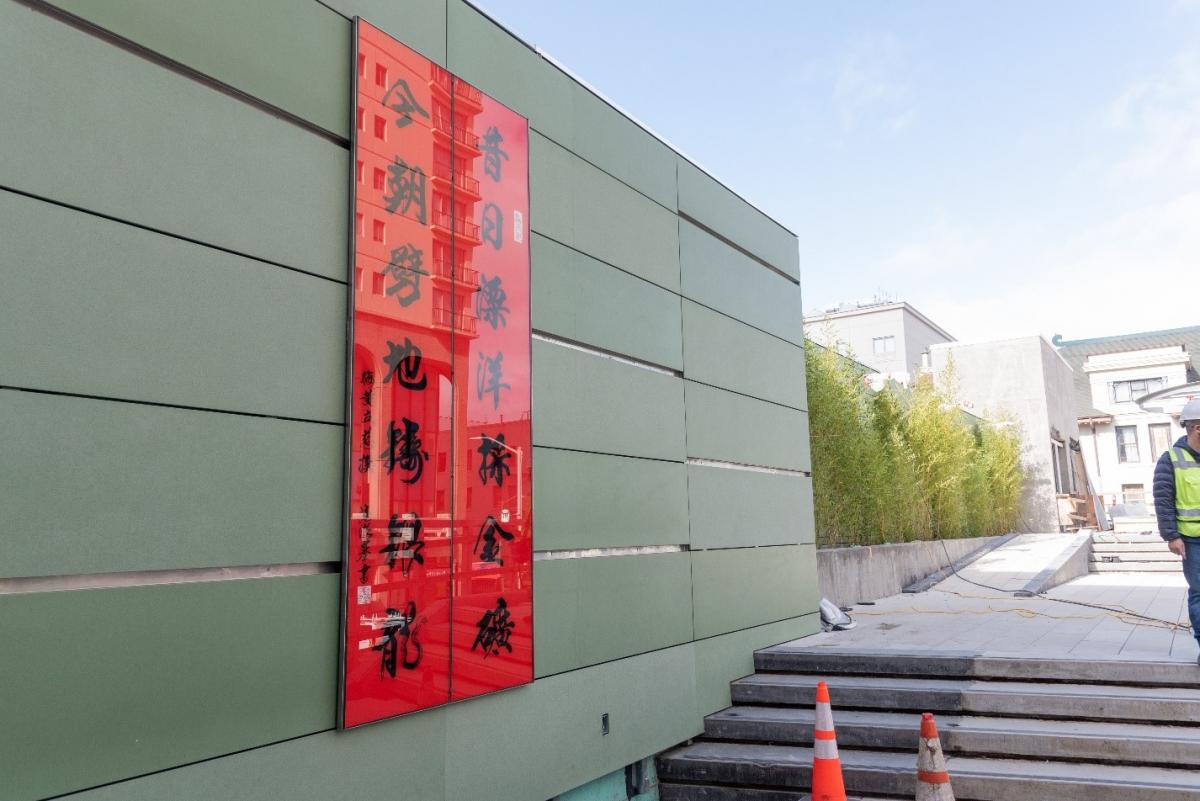
Artist Terry Luk paints the winning couplet for the Chinatown Central Subway Station, as composer Carin Mui, former Chinatown Community Development Center staffer Jerri Diep and former Central Subway Program Manager John Funghi look on.

 The winning couplet was recently installed in the public plaza above the Chinatown – Rose Pak Station

The winning couplet was recently installed in the public plaza above the Chinatown – Rose Pak Station

Public art in our stations is important not only for its aesthetic or beauty, but helps draw out the identity of a space, aids in the understanding of the historic or cultural significance of a neighborhood and builds a connection between visitor and the surrounding community. It’s an important reminder of the power of art to address the complexity and diversity of neighborhoods and to maintain cultural identity in the face of rapid urban transformation.


Published February 19, 2021 at 12:54AM
https://ift.tt/37pAePq

Show HN: Kanban board that helps Engineers learn Marketing https://ift.tt/2OQeTYW

Show HN: Kanban board that helps Engineers learn Marketing https://ift.tt/2NFbtrr February 18, 2021 at 11:44PM

Show HN: Stateless note sharing via URL Hash https://ift.tt/37pjhVi

Show HN: Stateless note sharing via URL Hash https://n0tes.github.io February 18, 2021 at 06:45PM

Show HN: ScreenToVideo – Record your videos flawlessly https://ift.tt/2NbjODq

Show HN: ScreenToVideo – Record your videos flawlessly https://ift.tt/3bNnemf February 18, 2021 at 09:15PM

Show HN: Merge multiple PDFs into one using WebAssembly https://ift.tt/3s6ywtU

Show HN: Merge multiple PDFs into one using WebAssembly http://localpdf.tech/ February 18, 2021 at 05:52PM

Show HN: Create APIs for static datasets without writing a single line of code https://ift.tt/3pxS8W4

Show HN: Create APIs for static datasets without writing a single line of code https://ift.tt/3k7WYsb February 18, 2021 at 05:15PM

Show HN: Kalaksi: a social-network built on top of RSS https://ift.tt/3aue6VW

Show HN: Kalaksi: a social-network built on top of RSS https://www.kalaksi.com February 18, 2021 at 04:37PM

Launch HN: Ontop (YC W21) – Easily hire and pay remote workers in LATAM https://ift.tt/3s2MTj0

Launch HN: Ontop (YC W21) – Easily hire and pay remote workers in LATAM Hi YC! We are Santiago Aparicio, Julian Torres and Jaime Abella and we are from Colombia. We are building Ontop (www.ontop.ai) to help companies do remote hiring and payouts, all the way from contract creation, to compliance documentation and easy money transfers. COVID-19 has taught us all that remote works. Our bet is that companies in the US and Europe will start hiring more people in LATAM because talent is increasing in quality at a fraction of price compared to what they can get elsewhere. Paying people in LATAM requires local knowledge to get the level of speed and compliance that workers need to get their money on time. We are building a solution so companies hiring in LATAM have to do less paperwork, can easily be compliant and disperse payments to different countries in a single place. In our previous startup Fitpal (multi gym membership in LATAM) we experienced the pain behind signing contracts, collecting documents and sending money to different countries. We had to pay hundreds of gyms in LATAM and were frustrated by the amount of time we spent doing administrative work, when we should have been thinking on how to hack our way to growth. We handle all paperwork, compliance and payments so onboarding new people is really easy. And most importantly, everything done legally, by the book, so that companies are always due diligence proof. Our solution is tailored for LATAM guaranteeing the best speed and compliance in the market. We want to hear your thoughts on our solution. We value feedback and case uses that you might have. Email us at founders@ontop.ai and we will personally give you a demo. February 18, 2021 at 01:58PM

Launch HN: Datrics (YC W21) – No-Code Analytics and ML for FinTech https://ift.tt/3beSuvY

Launch HN: Datrics (YC W21) – No-Code Analytics and ML for FinTech Hey everyone, we're Anton (avais), Kirill (Datkiri), and Volodymyr (vsofi), the founders of Datrics ( https://datrics.ai ). We help FinTech companies build and deploy machine learning models without writing code. We provide a visual tool to work with structured data by constructing a diagram of data manipulations from lego-like bricks, and then execute it all on a backend. This lets our users accomplish tasks that usually need a team of software engineers, data scientists, and DevOps. For instance, one of our customers is a consumer lending company that developed a new risk model using just our drag-and-drop interface. I used to lead a large data science consultancy team, being responsible for Financial Services (and Risks specifically). Our teams’ projects included end-to-end risk modeling, demand forecasting, and inventory management optimization, mostly requiring combined efforts from different technical teams and business units to be implemented. It usually took months of work to turn an idea into a complete solution, going through data snapshot gathering to cleansing to experimenting to working with engineering and DevOps teams to turn experiments in Jupyter notebooks into a complete application that worked in production. Moreover, even if the application and logic behind the scenes were really simple (could be just dozens or hundreds of lines of code for a core part), the process to bring this to end-users could take ages. We started thinking about possible solutions when a request from one of the Tier 1 banks appeared, which confirmed that we’re not alone in this vision: their problem was giving their “citizen data scientists” and “citizen developers” power to do data-driven work. In other words, work with the data and generate insights useful for business. That was the first time I’d heard the term “citizen data scientist”. Our users are now these citizen data scientists and developers, whom we’re giving the possibility to manipulate data, build apps, pipelines, and ML models with just nominal IT support. Datrics is designed not only to do ML without coding, but to give analysts and domain experts a drag and drop interface to perform queries, generate reports, and do forecasting in a visual way with nominal IT support. One of our core use cases is doing better credit risk modeling - create application scorecards based on ML or apply rule-based transactional fraud detection. For this use-case, we’ve developed intelligent bricks that allow you to do variables binning and scorecards in a visual way. Other use cases include reports and pivot tables on aggregating sales data from different countries in different formats or doing inventory optimization by forecasting the demand without knowing any programming language. We’re providing 50+ bricks to construct ETL pipelines and build models. There are some limitations - a finite number of pre-built building blocks that can be included in your app, but if there is no block that you need, you can easily build your own ( https://youtu.be/BQNFcZWwUC8 ). Datrics is initially cloud-native, but also can be installed on-prem for those customers who have corresponding security policy or setups. The underlying technology, the pipeline execution engine is rather complex and currently built on top of Dask, which gives Python scalability for big datasets. In the next release, we are going to support Pandas as well as to switch intelligently between small datasets for rapid prototyping and big datasets for pipeline deployments. We’re charging only for private deployments, so our web version is free: https://ift.tt/2Nfu1i1 . Try it to create your analytical applications with a machine learning component! We've put together a wiki ( https://wiki.datrics.ai ) to cover the major functionality, We are super-excited to hear your thoughts and feedback! We're big believers in the power of Machine Learning and self-service analytics and are happy to discuss what you think of no-code approaches for doing ML and analytics generally as well as the availability of them for non-data scientists. Or anything you want to share in this space! February 18, 2021 at 09:12AM

miércoles, 17 de febrero de 2021

Show HN: Job Alerts for the Freelancing Economy https://ift.tt/3awjXKu

Show HN: Job Alerts for the Freelancing Economy https://www.ginevar.com February 17, 2021 at 11:58PM

Show HN: Make all web forms copy/pasteable as a single input. Web 3.0 https://ift.tt/3s7N7Wf

Show HN: Make all web forms copy/pasteable as a single input. Web 3.0 https://ift.tt/33SslOJ February 17, 2021 at 11:49PM

Show HN: Amfora, a TUI Browser for Gemini https://ift.tt/2OO9Jg0

Show HN: Amfora, a TUI Browser for Gemini https://ift.tt/3guFkvZ February 17, 2021 at 11:44PM

Show HN: ExampleOfiOSLiDAR – sample codes using the Lidar sensor on iOS device https://ift.tt/3qz3iLJ

Show HN: ExampleOfiOSLiDAR – sample codes using the Lidar sensor on iOS device https://ift.tt/2N6GQv9 February 17, 2021 at 10:47PM

More Muni Metro Rail to Return in May

More Muni Metro Rail to Return in May
By Mariana Maguire

By May, the SFMTA plans to restart more Muni Metro rail service, extending the T Third Metro rail route between Sunnydale and West Portal, and bringing the full N Judah Metro rail route back into service between 4th and King (CalTrain) and La Playa (Ocean Beach).

T Third train at the ball park

Adding Metro rail service means we can connect more customers to essential jobs and locations along these routes and make it easier for customers to travel through downtown along Market Street.

Since August 2020, Muni has been undertaking intensive subway repairs after discovering some potentially faulty overhead splices and issues with ballast in the Eureka Curve/Twin Peaks Tunnel. We are now moving closer to completing the essential repairs and upgrades which will allow us to reopen subway service. Our work crews have removed all of the splices that had been potentially defective and replaced them with splices from a new manufacturer. We’ve also finished construction of the ballast in the Eureka Curve and have begun extensive testing and certification of the subway to ensure that everything works properly, reliably and safely. In the meantime, we’re also continuing important regular maintenance work to make as many improvements as possible while the subway is temporarily closed.

The return of the N Judah Metro rail will also free up buses that we will put to use on existing bus routes so that we can circulate other vehicles out for critical maintenance. In the effort to bring back as much bus service as possible and run buses more frequently, we have been pushing our vehicles to the limits with little or no time for maintenance. The additional buses released from N Judah service will allow us to maintain existing bus service while also keeping our fleet in good working order.

The SFMTA continues to work closely with district supervisors, stakeholders and community members to bring back additional service and modify existing service to better balance our available resources with our customers’ needs. This is especially a priority for communities most dependent on transit and who have the fewest alternative transportation options for essential travel.

We will continue to provide updates with more details and a complete list of service changes as information is available.


Published February 17, 2021 at 09:33PM
https://ift.tt/3bjrVFI

Show HN: Guesbook for my static site using GitHub Gist and Netlify Functions https://ift.tt/3bbNMPC

Show HN: Guesbook for my static site using GitHub Gist and Netlify Functions https://ift.tt/37ohr6W February 17, 2021 at 08:25PM

Show HN: Link Preview (Unfurl/Expand) API https://ift.tt/3s91Jol

Show HN: Link Preview (Unfurl/Expand) API https://ift.tt/3qwKSLx February 17, 2021 at 08:10PM

Show HN: Rails N+1 queries auto-detection with zero false positives https://ift.tt/3avA8Yu

Show HN: Rails N+1 queries auto-detection with zero false positives https://ift.tt/3s3LecU February 17, 2021 at 07:32PM

Show HN: An Event Sourced Minesweeper https://ift.tt/3u9Hf0g

Show HN: An Event Sourced Minesweeper https://ift.tt/3atApLx February 17, 2021 at 03:28PM

Launch HN: Worksphere (YC W21) – Manage flexible in-office or remote workspaces https://ift.tt/3s2IAnT

Launch HN: Worksphere (YC W21) – Manage flexible in-office or remote workspaces Hey HN, Aakhil, Theresa & Mark here at Worksphere ( https://worksphere.com ). Our software helps companies manage a safe workplace where employees can work flexibly in-office or remote. Worksphere automates desk reservations, safe entry, and gives companies office usage data to right-size their workplaces. We previously worked together at Lish, a corporate catering marketplace startup catering (pun intended) to tech companies. Last March our revenue went off a cliff. No people in office = no lunch orders. We love our clients and our team, so we got to work on solving a new problem for our primary users - HR, Office, and Facilities Managers. At the start of the pandemic, our users were struggling with how to return to their offices safely. New problems like enforcing social distancing, screening for COVID-19 symptoms, and contact tracing could not be solved at scale with existing tools. New coronavirus workplace regulations have cropped up, which are a pain and come with big financial risk if companies don’t comply (we’re looking at you CA businesses dealing with SB 1159 & AB 685 - learn more at https://ift.tt/3apLxZD... ). As the pandemic has continued (and continued, and continued) businesses are facing a new challenge. 75% of office employees report that they want a hybrid in-office and remote schedule. No one misses their 5-day-a-week commute. At the same time, collaboration and culture are hard to foster on Zoom and Slack alone. Employees still want access to an office when needed, but don’t want to come to work in an empty space. Businesses want the upsides of flexibility, but don’t want to pay for empty or only occasionally used desks — office space costs $10-12k per employee annually in major US cities. We believe that a hybrid workweek is a better workweek, and that an active approach is needed to make it a win-win for employees and businesses. Our features help businesses reopen safely and realize the full potential of a flexible workplace. We automate the wellness surveys, contact tracing, and capacity limits needed to enforce internal safety guidelines and regional regulations. This alleviates a ton of manual work for Office and HR managers. Employees can create in-office schedules and see who else is in the office to increase collaboration. We track office utilization data so companies can make smart decisions about their office space and lease. Worksphere is $6 per active employee/month, and our clients only pay for employees that come to the office. If you’re one of the 3 of 4 people who wants to work flexibly post-pandemic, or if you manage a workplace, we’d love to hear from you. How frequently do you think you’ll need office space? What problems are you facing in this changing work environment? We’ll reply in the comments or you can email us at info@worksphere.com. Thanks so much for your feedback! February 17, 2021 at 05:06PM

The Art of Balancing Work and Life: Tips and Strategies

Mastering the Art of Balancing Work and Life In today's fast-paced world, many individuals struggle to find a healthy balance between th...